Tackling cloud migration can feel overwhelming, with countless technical puzzles to solve and high stakes for your business. Yet more than 80 percent of organizations experience migration delays because they skip key planning steps. Most people think cloud success is all about the tools or the tech. The biggest differentiator is actually strategy and preparation—and the most successful migrations start before a single file gets moved.
2025 Cloud Migration Checklist: 6 Essential Steps for Success
- Step 1: Assess Your Current IT Infrastructure
- Step 2: Determine Your Cloud Migration Goals
- Step 3: Select The Right Cloud Service Provider
- Step 4: Develop A Comprehensive Migration Strategy
- Step 5: Execute The Migration Plan With A Pilot Test
- Step 6: Verify Data Integrity And Optimize For Performance
Quick Summary
| Key Point | Explanation |
|---|---|
| 1. Thoroughly assess your current IT infrastructure | Document all hardware, software, and network components to identify challenges and inform migration decisions. |
| 2. Define clear cloud migration goals | Tailor objectives to your organization’s needs, focusing on measurable outcomes such as cost savings and performance improvements. |
| 3. Carefully select the right cloud service provider | Evaluate potential providers based on reliability, security, compatibility, and total cost of ownership to find the best fit. |
| 4. Develop a detailed migration strategy | Create a structured plan including timelines, resource allocation, and risk assessments to guide the migration process. |
| 5. Conduct a pilot test before full deployment | Validate your migration strategy with a controlled test to identify potential issues and refine your approach for larger implementation. |
Step 1: Assess your current IT infrastructure
The foundation of a successful cloud migration begins with a comprehensive understanding of your existing IT environment. This critical first step involves creating a detailed inventory and evaluation of your current technology landscape, which serves as a strategic roadmap for your cloud migration checklist.
Starting your assessment requires a systematic approach to documenting every technological component within your organization. Walk through each department and carefully catalog all hardware, software, network infrastructure, and current computing resources. Detailed documentation is crucial for identifying potential migration challenges and opportunities. This means mapping out server configurations, understanding software dependencies, tracking application usage, and identifying legacy systems that might require special migration considerations.
Your assessment should include a thorough performance and compatibility analysis. Examine the current system’s performance metrics, resource utilization, network bandwidth, storage requirements, and potential bottlenecks. Critical questions to answer include: How much computational power do you currently use? What are the peak usage times? Which applications are mission-critical? Which systems experience the most strain?
Key elements to document during your infrastructure assessment include:
- Current hardware specifications and age
- Software licensing and version information
- Network topology and connectivity configurations
- Existing security protocols and compliance requirements
- Application interdependencies and integration points
Consider leveraging professional assessment tools that can automatically scan and inventory your existing infrastructure. Many cloud service providers offer complimentary assessment services that generate comprehensive reports about your current environment. These tools can provide insights into potential migration strategies, estimated cloud readiness, and recommended optimization approaches.
Successful infrastructure assessment goes beyond technical documentation. Engage with department heads and key stakeholders to understand their specific technological needs and potential pain points. Their insights will help create a migration strategy that addresses both technical requirements and operational workflow considerations.
Verify your assessment is complete by ensuring you have a holistic view of your current IT ecosystem. A well-documented infrastructure inventory will serve as your primary reference point throughout the cloud migration process, helping you make informed decisions and anticipate potential challenges before they emerge.
Step 2: Determine your cloud migration goals
After meticulously documenting your current IT infrastructure, the next crucial phase of your cloud migration checklist involves defining clear, strategic objectives that align with your organization’s broader technological and business aspirations. This step transforms your technical assessment into a purposeful roadmap for cloud transformation.
Cloud migration goals are not one-size-fits-all. They must be precisely tailored to your organization’s unique operational requirements, growth trajectory, and technological ecosystem. Begin by conducting comprehensive discussions with leadership across different departments to understand their specific technological expectations and pain points. Strategic alignment is paramount in creating migration objectives that deliver tangible business value.
Typically, organizations pursue cloud migration with several core objectives in mind. Cost optimization remains a primary driver, with many businesses seeking to reduce infrastructure maintenance expenses and transition from capital expenditure to more flexible operational expenditure models. Performance improvement represents another critical goal, where companies aim to leverage cloud infrastructure’s scalability and advanced computational capabilities to enhance system responsiveness and reliability.
Key migration goals often include:
- Improving operational efficiency
- Enhancing data security and compliance
- Increasing technological agility and scalability
- Reducing infrastructure maintenance overhead
- Supporting remote and distributed workforce requirements
Qualitative goal setting requires translating broad objectives into specific, measurable outcomes. Instead of vaguely stating “we want better performance,” articulate precise metrics such as “reduce application response time by 40%” or “decrease infrastructure management costs by 25% within 12 months.” These concrete benchmarks provide clear success indicators and help maintain project focus.
Technological considerations play a significant role in goal determination. Evaluate your current application portfolio and identify which systems are prime candidates for cloud migration. Some applications might benefit from complete cloud transition, while others may require hybrid or phased migration strategies. Consider factors like application complexity, data sensitivity, regulatory compliance, and existing integration dependencies.
Verify your migration goals are comprehensive by ensuring they address technological, financial, and operational dimensions. A well-crafted migration strategy transforms cloud adoption from a technical exercise into a strategic business initiative that delivers measurable value across your entire organizational ecosystem.
Step 3: Select the right cloud service provider
Selecting the appropriate cloud service provider represents a pivotal decision in your cloud migration journey. This step requires a strategic approach that balances technical requirements, financial considerations, and long-term organizational goals. The right provider will serve as a critical technology partner, supporting your digital transformation and enabling future growth.
Comprehensive evaluation is key to identifying a cloud service provider that aligns with your specific infrastructure needs. Begin by creating a detailed comparison matrix that assesses potential providers across multiple dimensions. Consider factors beyond basic pricing, including service reliability, security protocols, compliance capabilities, technical support quality, and scalability options.
According to government cloud computing guidelines, organizations should carefully analyze different cloud service models. These include Infrastructure as a Service (IaaS), Platform as a Service (PaaS), and Software as a Service (SaaS). Each model offers distinct advantages, and your selection should directly reflect the specific technological requirements uncovered during your initial infrastructure assessment.
Critical evaluation criteria for cloud service providers include:
- Data center locations and geographic redundancy
- Security certifications and compliance standards
- Performance metrics and service level agreements
- Integration capabilities with existing systems
- Pricing structure and total cost of ownership
Financial considerations extend beyond immediate migration costs. Examine the provider’s pricing model, looking for transparency in billing, potential hidden fees, and long-term cost implications. Some providers offer attractive initial pricing but may include complex pricing tiers or unexpected charges for data transfer, storage, or advanced features.
Technical compatibility represents another crucial evaluation point. Assess how well the potential cloud service provider integrates with your existing technology stack. Request detailed migration support documentation, compatibility testing resources, and potential proof-of-concept opportunities. Many leading providers offer comprehensive migration assessment tools that can help you understand potential challenges and optimization strategies.
Verify your provider selection by conducting a thorough due diligence process. This includes requesting detailed service level agreements, understanding data ownership and migration exit strategies, and confirming the provider’s track record of supporting organizations similar to yours. A well-chosen cloud service provider becomes more than a vendor – they become a strategic technology partner driving your digital transformation forward.
To help you compare cloud service providers, the following table organizes key evaluation criteria to consider during selection.
| Evaluation Criteria | Description |
|---|---|
| Data Center Locations | Proximity, geographic redundancy, and regional coverage |
| Security Certifications & Compliance | Evidence of adherence to industry standards and regulations |
| Performance Metrics & SLAs | Uptime, reliability guarantees, and performance benchmarks |
| Integration Capabilities | Compatibility with existing systems and applications |
| Pricing Structure & Total Cost | Transparent costs, billing clarity, and long-term affordability |
| Technical Support Quality | Availability and expertise of assistance |
| Scalability Options | Ability to handle fluctuating resource demands |
Step 4: Develop a comprehensive migration strategy
Developing a comprehensive migration strategy transforms your cloud migration from a theoretical concept into an actionable, structured plan. This critical step requires meticulous planning that bridges the gap between your current infrastructure and future technological landscape. Strategic planning is the difference between a smooth transition and a potential disaster.
Begin by creating a detailed migration roadmap that breaks down the entire process into manageable, sequential phases. This approach allows for incremental implementation, reducing overall risk and providing opportunities for adjustment. Consider a phased migration strategy that prioritizes less critical systems first, allowing your team to build confidence and expertise before tackling more complex or mission-critical applications.
Your migration strategy must address multiple critical dimensions beyond simple technical transfer. Financial considerations, potential operational disruptions, staff training requirements, and long-term technological implications all play crucial roles in successful cloud migration. Conduct a thorough risk assessment that identifies potential challenges, including data transfer complexities, application compatibility issues, and potential performance bottlenecks.
Key elements to include in your migration strategy:
- Detailed timeline with specific migration milestones
- Resource allocation and budget considerations
- Comprehensive testing and validation protocols
- Contingency and rollback plans
- Staff training and change management approach
Application prioritization becomes a critical decision-making process. Not all systems are equally suited for immediate cloud migration. Some applications might require significant refactoring, while others can be lifted and shifted with minimal modifications. Categorize your applications based on migration complexity, business criticality, and potential cloud compatibility. This approach allows for a more nuanced and strategic migration approach that minimizes potential disruptions.
Technology compatibility and integration represent another crucial consideration. Develop a detailed mapping of existing system dependencies, identifying potential integration challenges and required modifications. This might involve creating middleware solutions, developing custom integration tools, or implementing additional security layers to ensure seamless operational continuity.
Verify your migration strategy’s comprehensiveness by conducting a thorough review with key stakeholders from IT, operations, and business leadership. A well-developed strategy should provide clear answers to critical questions: What are the exact migration steps? How will business operations be maintained during the transition? What are the specific success metrics? What contingency plans exist if unexpected challenges arise? Your migration strategy should serve as a living document that provides clear guidance while remaining flexible enough to adapt to emerging technological and organizational needs.

Step 5: Execute the migration plan with a pilot test
Executing a pilot test represents a critical juncture in your cloud migration journey, serving as a controlled environment to validate your migration strategy and identify potential challenges before full-scale implementation. Pilot testing transforms theoretical planning into practical validation, allowing your organization to mitigate risks and refine your approach with minimal operational disruption.
Select a non-critical application or system segment that closely represents your broader technological ecosystem for the initial pilot test. This choice should balance complexity and manageability, providing meaningful insights without introducing excessive risk. Ideal pilot candidates are typically standalone applications with minimal interdependencies that can demonstrate key migration challenges and performance characteristics.
Prepare meticulously for the pilot test by establishing clear, measurable objectives and comprehensive success criteria. Define specific performance benchmarks, including response times, resource utilization, and system reliability. Create a detailed monitoring framework that captures granular performance metrics, allowing you to compare pre-migration and post-migration system behaviors with precision.
Critical pilot test preparation steps include:
- Establishing baseline performance metrics
- Creating detailed documentation protocols
- Configuring comprehensive monitoring tools
- Developing immediate rollback capabilities
- Identifying key performance indicators
Technical validation goes beyond simple system transfer. Rigorously test application compatibility, data integrity, security configurations, and network performance during the pilot phase. This means simulating real-world workloads, conducting thorough security assessments, and verifying that all application dependencies function correctly in the new cloud environment.
Communication becomes paramount during the pilot test. Engage stakeholders from multiple departments, ensuring transparency about potential disruptions and expected outcomes. Create a dedicated communication channel for reporting and tracking any issues discovered during the migration process. This collaborative approach helps build organizational confidence and provides multiple perspectives on potential challenges.
Verify the pilot test’s success by conducting a comprehensive review that goes beyond technical metrics. Assess not just system performance, but also user experience, operational workflow impacts, and alignment with original migration objectives. A successful pilot test provides actionable insights that inform your broader migration strategy, allowing you to refine your approach, address potential bottlenecks, and build organizational readiness for full-scale cloud migration.
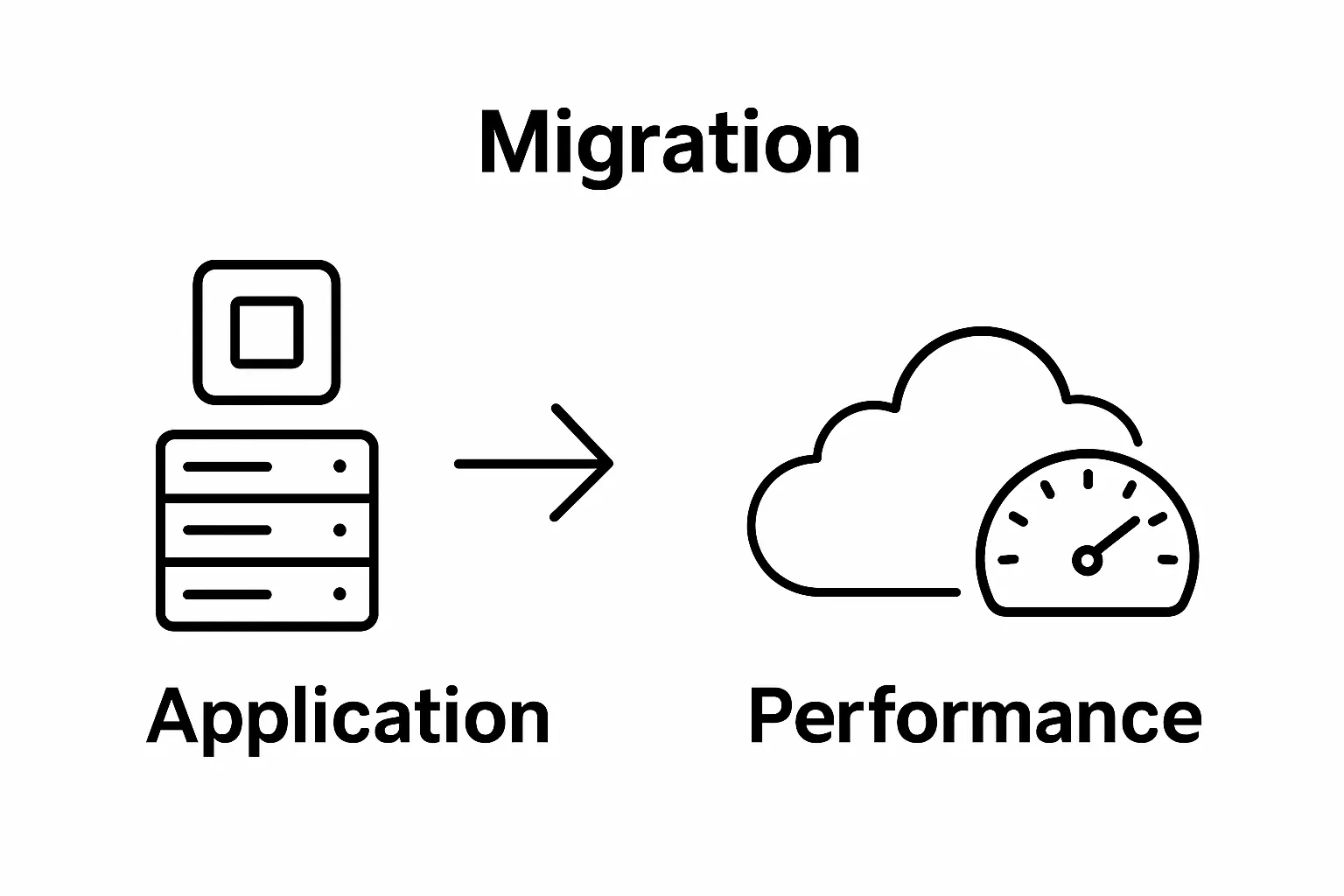 Remember, the goal is not perfection, but continuous improvement and risk mitigation.
Step 6: Verify data integrity and optimize for performance
After successfully completing your pilot migration, the critical next phase involves rigorous data integrity verification and performance optimization. This step transforms your cloud migration from a technical exercise into a strategic operational enhancement, ensuring that your data remains accurate, secure, and efficiently accessible.
Data verification requires a multilayered approach that goes beyond simple file transfer confirmation. Implement comprehensive checksum comparisons, cryptographic hash validation, and byte-level data integrity checks to guarantee that every piece of information transferred maintains its original integrity. This meticulous process protects against potential data corruption or loss during the migration process.
According to government cybersecurity guidelines, organizations must establish robust validation protocols that systematically compare source and destination data sets. This means conducting thorough reconciliation processes that verify not just file presence, but also metadata, permissions, and structural relationships within your datasets.
Performance optimization strategies to consider include:
- Implementing intelligent caching mechanisms
- Configuring appropriate content delivery networks
- Optimizing database query structures
- Rightsizing cloud computing resources
- Establishing automated performance monitoring
Performance benchmarking becomes crucial in understanding your new cloud environment’s capabilities. Develop a comprehensive performance testing framework that simulates real-world workloads, measuring response times, resource utilization, and system scalability. Compare these metrics against your original baseline established during the initial infrastructure assessment to quantify improvements and identify potential optimization opportunities.
Cloud resource optimization requires continuous monitoring and strategic adjustment. Leverage native cloud monitoring tools that provide granular insights into system performance, resource consumption, and potential bottlenecks. These tools enable proactive management, allowing you to dynamically adjust computing resources, optimize network configurations, and ensure cost-effective cloud utilization.
Verify the success of your data integrity and performance optimization efforts by establishing clear, measurable criteria. This includes confirming 100% data transfer accuracy, achieving predefined performance benchmarks, and ensuring that all critical business applications function seamlessly in the new cloud environment. Remember that optimization is an ongoing process – your cloud migration strategy should include provisions for continuous monitoring, refinement, and adaptation to evolving technological requirements.
Below is a checklist summarizing critical steps to verify the success of your data integrity and performance optimization efforts after migration.
| Verification Step | Completion Criteria |
|---|---|
| Comprehensive Data Integrity Checks | All source and destination files match with checksums and hashes |
| Metadata & Permission Validation | File structures, permissions, and metadata are accurately retained |
| Performance Benchmarking | New cloud environment meets or exceeds baseline metrics |
| Application Functionality Assessment | All business-critical applications operate seamlessly |
| Continuous Monitoring Setup | Automated alerts and dashboards are actively monitoring for issues |
| Documentation of Outcomes | Results and optimization actions are fully recorded |
Take the Uncertainty Out of Cloud Migration with SRS Networks
Migrating to the cloud can feel overwhelming. The “Essential Cloud Migration Checklist for 2025 Success” highlights just how critical it is to assess your infrastructure, set measurable goals, choose the right partner, and guarantee data integrity. Missing any detail can put your data, compliance, and efficiency at risk. If your business lacks in-house IT expertise to manage dependencies, security, or performance optimization, you need trusted local support you can rely on.
Move forward with confidence. The team at SRS Networks will guide your business through every stage, from transparent readiness assessments to hands-on cloud migration and performance tuning. Let our experts help with full Cloud Computing Solutions and tested Cybersecurity Services. The sooner you act, the faster you benefit from secure, scalable cloud operations built for your goals. Contact SRS Networks today to start your migration right and secure your business future.
Frequently Asked Questions
What is the first step in a cloud migration checklist for successful implementation?
The first step is to assess your current IT infrastructure, which involves creating a detailed inventory and understanding your existing technology landscape to identify potential challenges and opportunities for migration.
How do I determine my cloud migration goals?
Determine your goals by engaging with leadership across departments to align technological expectations and pain points. Common goals include cost optimization, performance improvement, and enhanced data security.
What should I consider when selecting a cloud service provider?
Consider factors such as service reliability, security protocols, compliance capabilities, technical support quality, scalability options, and the provider’s pricing structure and total cost of ownership.
Why is pilot testing important in the cloud migration process?
Pilot testing is crucial because it allows you to validate your migration strategy in a controlled environment, identify potential issues, and refine your approach before full-scale implementation.