Cyber threats are evolving faster than ever and many companies still struggle to keep employees aware of even the basics. Over 90 percent of successful cyberattacks start with human error. Surprised? Most organizations do plenty of training yet still keep missing the mark. Real progress comes when cybersecurity education moves from boring checklists to hands-on, tailored experiences that actually change what people do—not just what they know.
Step-by-Step Cybersecurity Training Guide for Employees
- Step 1: Assess Current Cybersecurity Knowledge And Gaps
- Step 2: Develop Tailored Training Objectives And Materials
- Step 3: Implement Interactive Training Sessions
- Step 4: Conduct Hands-On Simulations And Drills
- Step 5: Evaluate Training Effectiveness And Knowledge Retention
- Step 6: Establish Continuous Learning And Improvement Protocols
Quick Summary
| Key Point | Explanation |
|---|---|
| 1. Assess Current Cybersecurity Knowledge | Conduct thorough internal evaluations to identify employees’ cybersecurity skills and knowledge gaps for effective training. |
| 2. Develop Tailored Training Objectives | Create specific, measurable learning objectives that directly address identified gaps and promote proactive security behaviors. |
| 3. Implement Interactive Training Sessions | Use engaging formats like live demos and gamification to boost employee participation and enhance learning retention. |
| 4. Conduct Hands-On Simulations | Use realistic scenarios to train employees in practical threat response, gradually increasing complexity for skill development. |
| 5. Establish Continuous Learning Protocols | Develop systems for ongoing training updates and peer learning to adapt to new threats and maintain security awareness. |
Step 1: Assess Current Cybersecurity Knowledge and Gaps
Assessing your organization’s cybersecurity knowledge and identifying skill gaps is the foundational first step in developing an effective cybersecurity training program for employees. This critical initial phase helps you understand your current security posture and design targeted educational interventions that address specific vulnerabilities within your workforce.
Begin by conducting a comprehensive internal assessment that evaluates employees’ existing cybersecurity awareness and skills. This involves creating a structured evaluation process that goes beyond surface level understanding. Develop a multi-faceted assessment strategy that combines different measurement techniques to gain a holistic view of your organization’s cybersecurity readiness.
Start with a confidential online survey designed to gauge employees’ current knowledge levels across various cybersecurity domains. Include scenario-based questions that test practical understanding rather than just theoretical knowledge. For instance, ask employees how they would respond to suspicious email attachments, unexpected login attempts, or potential phishing scenarios. These questions will reveal not just knowledge gaps but also potential behavioral risks.
Complement the survey with practical skills testing. This might involve simulated phishing exercises or controlled cybersecurity challenge scenarios that reveal how employees actually respond to potential security threats. By tracking click rates, response times, and decision-making patterns, you can identify specific areas where targeted training will be most effective.
Consult with department managers to gather qualitative insights about team-specific cybersecurity challenges. Different departments often have unique technological interactions and risk profiles. A marketing team’s digital exposure differs significantly from a finance department’s, so understanding these nuanced contexts is crucial for developing precise training strategies.
Below is a summary table of various internal assessment techniques and the purpose each serves to identify cybersecurity knowledge and skill gaps among employees.
| Assessment Technique | Purpose |
|---|---|
| Confidential Online Survey | Gauges individual knowledge levels and practical understanding through scenario-based questions |
| Practical Skills Testing | Reveals real employee responses to simulated security threats |
| Simulated Phishing Exercises | Measures vulnerability to phishing and click rates |
| Department Manager Consultations | Provides qualitative insights into team-specific cybersecurity challenges |
| Controlled Challenge Scenarios | Tracks decision-making patterns and specific behavioral risks |
| Documentation of Findings | Creates a detailed report of gaps and vulnerabilities for targeted intervention |
Document your findings comprehensively, creating a detailed report that highlights key knowledge gaps, potential risk areas, and specific skill deficiencies. This report becomes your roadmap for developing a tailored cybersecurity training curriculum that addresses your organization’s unique needs.
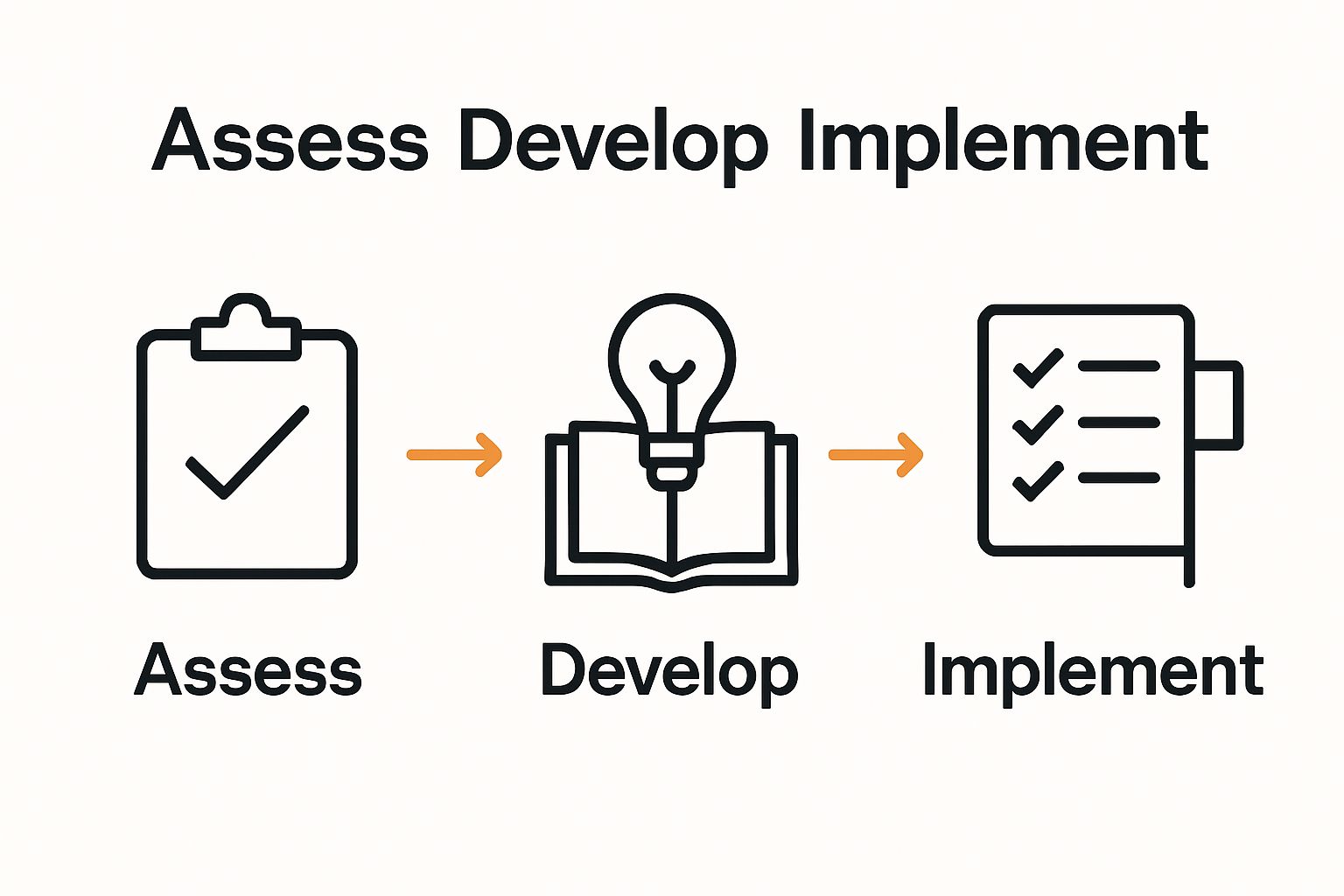 By taking this systematic, data-driven approach, you transform cybersecurity training from a generic compliance exercise into a strategic organizational resilience initiative.
Step 2: Develop Tailored Training Objectives and Materials
Developing tailored cybersecurity training objectives and materials transforms generic compliance activities into a strategic organizational defense mechanism. After assessing your current knowledge landscape, this step focuses on creating precise, engaging educational content that speaks directly to your employees’ specific needs and technological interactions.
Begin by translating your initial assessment findings into clear, measurable learning objectives. These objectives should address the specific knowledge gaps and skill deficiencies identified in your previous evaluation. Consider crafting objectives that not only educate but also encourage proactive security behaviors. For instance, if your assessment revealed weak password management practices, your objective might focus on teaching employees how to create robust, unique passwords and understand the risks of credential reuse.
Create training materials that combine multiple learning modalities to maximize engagement and knowledge retention. This means developing a mix of interactive online modules, live workshop sessions, practical simulation exercises, and concise reference guides. Video-based content with real-world scenarios can be particularly effective in helping employees understand complex cybersecurity concepts. Design these materials to be visually appealing, concise, and directly relevant to employees’ daily technological interactions.
Segment your training content based on different organizational roles and technological exposure. A customer service representative’s cybersecurity training will differ significantly from that of an IT professional or a finance team member. Customize scenarios, examples, and learning paths to reflect the specific digital risks and responsibilities associated with each role. This role-based approach ensures that training feels relevant and immediately applicable, increasing employee motivation and knowledge absorption.
Include practical, hands-on components that allow employees to practice identifying and responding to potential security threats. Develop interactive modules where employees can safely experiment with recognizing phishing attempts, managing suspicious emails, and understanding social engineering tactics. By creating a low-stakes learning environment that mimics real-world challenges, you transform cybersecurity education from a passive experience into an active skill-building opportunity.
Finally, design a mechanism for tracking and measuring the effectiveness of your training materials. This might involve post-training assessments, periodic skill verification tests, and continuous feedback loops that allow you to iteratively improve your cybersecurity education program. Remember that cybersecurity training is not a one-time event but an ongoing process of adaptation and learning.
Step 3: Implement Interactive Training Sessions
Implementing interactive cybersecurity training sessions transforms passive learning into an engaging, dynamic experience that empowers employees to become active participants in your organization’s security strategy. This step moves beyond traditional lecture-style training by creating immersive, memorable learning environments that challenge and motivate employees to develop robust security skills.
Design training sessions that break away from monotonous presentation formats. Incorporate live demonstration scenarios that simulate real-world cybersecurity challenges, allowing employees to experience potential threats in a controlled, educational setting. For example, conduct live phishing simulation exercises where participants must identify and respond to sophisticated email threats. These practical demonstrations help employees develop critical decision-making skills and understand the nuanced nature of cyber risks.
Utilize a mix of training delivery methods to accommodate different learning preferences and organizational constraints. Blend in-person workshops with virtual training modules, ensuring flexibility for remote and on-site employees. Interactive webinars with real-time polling, Q&A sessions, and breakout discussion groups can transform traditional online training into a collaborative learning experience.
Consider creating short, focused training segments that can be completed during natural work breaks, making cybersecurity education feel less like a burdensome requirement and more like a valuable skill development opportunity.
The table below compares different training delivery methods highlighted in the guide, along with their primary advantages for enhancing employee engagement and knowledge retention.
| Delivery Method | Key Features | Advantage |
|---|---|---|
| Live Demonstrations | Realistic simulations of cyber threats | Builds practical decision-making skills |
| Interactive Webinars | Real-time polls, Q&A, group discussions | Increases engagement and collaboration |
| In-Person Workshops | Facilitator-led, hands-on activities | Allows immediate feedback and teamwork |
| Gamified Modules | Points, leaderboards, challenges | Makes learning competitive and enjoyable |
| Video-based Content | Short segments with real-world scenarios | Boosts retention and fits natural work breaks |
| Virtual Training | Online modules accessible anytime, anywhere | Flexible for remote and on-site employees |
Encourage active participation through gamification techniques that make learning cybersecurity engaging and competitive. Develop point-based systems, leaderboards, and challenge-based learning modules that motivate employees to improve their security knowledge. Create scenarios where teams compete to identify and mitigate potential security threats, turning education into an interactive and enjoyable experience. This approach not only enhances learning retention but also helps build a positive organizational culture around cybersecurity awareness.
Implement a comprehensive feedback mechanism to continuously improve your training approach. After each training session, collect detailed participant feedback through surveys that go beyond simple satisfaction ratings. Ask specific questions about learning effectiveness, practical applicability, and areas where employees feel they need additional support. Use these insights to refine your training materials, ensuring that your cybersecurity education remains dynamic, relevant, and aligned with evolving technological threats.
Conduct periodic skills verification assessments to measure the tangible impact of your interactive training sessions. These assessments should evaluate not just theoretical knowledge but practical application of cybersecurity principles in realistic workplace scenarios. By tracking improvements in employee response times, threat recognition rates, and overall security behavior, you can demonstrate the concrete value of your interactive training approach.
Step 4: Conduct Hands-On Simulations and Drills
Conducting hands-on simulations and drills represents the critical transition point where cybersecurity training moves from theoretical knowledge to practical skill development. According to NIST cybersecurity guidelines, realistic scenario-based exercises provide the most effective method for testing and improving organizational security readiness.
Develop a comprehensive simulation strategy that challenges employees across multiple potential cyber threat scenarios. These simulations should mirror real-world attack vectors employees might encounter, including sophisticated phishing attempts, social engineering challenges, and potential data breach scenarios. By creating controlled, low-stakes environments where employees can practice their response mechanisms, you transform passive learning into active skill development.
Design simulation exercises that progressively increase in complexity, starting with basic threat recognition and advancing to more nuanced, multi-layered cybersecurity challenges. Begin with simple phishing email identification tests, then escalate to more complex scenarios involving potential ransomware threats, unauthorized access attempts, and sophisticated social engineering tactics. This graduated approach allows employees to build confidence and competence incrementally, preventing overwhelm while steadily expanding their cybersecurity capabilities.
Implement a robust tracking and feedback mechanism during these simulation drills. Use advanced monitoring tools that capture detailed metrics about employee responses, including reaction times, decision-making processes, and potential vulnerability points. These insights provide valuable data for understanding organizational security readiness and identifying areas requiring additional targeted training.
Create a supportive environment that treats simulation exercises as learning opportunities rather than punitive assessments. When employees fail or make mistakes during drills, provide immediate, constructive feedback that helps them understand their errors and learn correct response strategies. This approach transforms potential moments of frustration into powerful learning experiences that enhance overall organizational security awareness.
Establish clear protocols for post-simulation debriefing and skill improvement. After each drill, conduct comprehensive review sessions that break down individual and collective performance, highlighting both successful strategies and areas needing improvement. These sessions should be collaborative, encouraging open dialogue about cybersecurity challenges and fostering a culture of continuous learning and mutual support.
Verify the effectiveness of your simulation program by tracking key performance indicators such as improved threat detection rates, reduced response times to potential security incidents, and increased employee confidence in managing cybersecurity challenges. These metrics will help you demonstrate the tangible value of your hands-on training approach and justify ongoing investment in cybersecurity skill development.

Step 5: Evaluate Training Effectiveness and Knowledge Retention
Evaluating the effectiveness of your cybersecurity training program is a critical step that transforms educational efforts from a checkbox exercise into a strategic organizational improvement process. This phase goes beyond simple completion metrics, focusing on comprehensive assessment of knowledge retention, behavioral change, and tangible security skill development.
Develop a multi-dimensional evaluation framework that captures both quantitative and qualitative insights into your cybersecurity training impact. Design comprehensive assessment tools that measure not just immediate knowledge absorption but long-term behavioral changes in employee security practices. This might involve creating sophisticated tracking mechanisms that monitor employee performance across different security scenarios, comparing pre-training baseline measurements with post-training results.
Implement periodic knowledge assessment tests that challenge employees with realistic, evolving cybersecurity scenarios. These assessments should be designed to test practical application of learned skills rather than simple memorization. Create scenario-based evaluations that require employees to demonstrate critical thinking and decision-making capabilities in complex security situations. By using dynamic, adaptive testing methodologies, you can more accurately gauge the depth of employee understanding and identify potential knowledge gaps that require additional targeted training.
Establish a continuous feedback loop that involves both formal assessment mechanisms and informal knowledge capture strategies. Conduct confidential surveys and interviews that provide employees with opportunities to share their perspectives on the training program. Pay particular attention to qualitative insights that reveal how cybersecurity education is translating into day-to-day workplace behaviors. This approach helps you understand not just what employees have learned, but how they are applying that knowledge in real-world contexts.
Utilize advanced analytics and reporting tools to track key performance indicators related to cybersecurity knowledge and behavior. Monitor metrics such as reduced security incident rates, improved threat detection capabilities, and enhanced compliance with organizational security protocols. These data-driven insights provide concrete evidence of your training program’s effectiveness and can help justify ongoing investment in cybersecurity education.
Create a systematic approach to iterative improvement based on your evaluation findings. Develop a flexible training curriculum that can be quickly adapted in response to assessment results, emerging technological threats, and evolving organizational needs. This adaptive methodology ensures that your cybersecurity training remains dynamic, relevant, and consistently aligned with the most current security challenges your organization might face.
Verify the long-term impact of your training by conducting periodic comprehensive reviews that assess not just immediate knowledge retention but sustained behavioral change over extended periods. This approach transforms cybersecurity training from a one-time event into a continuous, evolving organizational learning process.
Step 6: Establish Continuous Learning and Improvement Protocols
Establishing continuous learning and improvement protocols transforms cybersecurity training from a static program into a dynamic, adaptive organizational capability. This final step creates a sustainable framework that ensures your cybersecurity education remains responsive to emerging technological threats and evolving workplace challenges.
Design a proactive knowledge management system that facilitates ongoing learning and information sharing across your organization. Create internal communication channels dedicated to cybersecurity insights, such as a dedicated digital platform where employees can share recent threat experiences, discuss emerging security trends, and collaborate on best practices. This approach democratizes cybersecurity learning, turning every employee into a potential knowledge contributor and threat detector.
Implement a regular update mechanism for training materials that responds quickly to emerging cybersecurity landscapes. Develop a flexible curriculum framework that allows for rapid content modification based on recent cyber incidents, technological advancements, and industry-specific threat intelligence. This might involve quarterly review sessions where security experts assess current training content and identify areas requiring immediate updates or refinement.
Create mentorship and peer learning programs that encourage knowledge transfer between experienced and newer employees. Establish cross-departmental cybersecurity champions who can serve as informal learning resources, helping to spread security awareness and best practices throughout the organization. These internal advocates can provide context-specific guidance that resonates more deeply than generic training modules, creating a more organic learning environment.
Develop an incentive structure that motivates continuous cybersecurity skill development. Consider implementing recognition programs that reward employees for completing advanced training modules, identifying potential security risks, or demonstrating exceptional security awareness. These incentives can help transform cybersecurity learning from a mandatory requirement into an engaging professional development opportunity.
Establish robust feedback mechanisms that capture insights from every layer of the organization. Conduct regular anonymous surveys, maintain open communication channels with employees, and create safe spaces for discussing potential security concerns or training improvement suggestions. By treating cybersecurity education as a collaborative process, you build a more engaged and security-conscious workforce.
Verify the effectiveness of your continuous learning protocols by tracking key performance indicators such as reduced security incidents, improved threat detection rates, and employee engagement with ongoing training resources. Regularly assess these metrics to ensure your learning and improvement protocols remain dynamic, relevant, and aligned with your organization’s evolving security needs.
Turn Employee Awareness into Real Cybersecurity Protection
Is your team only checking boxes or truly defending your business? The step-by-step guide highlights just how crucial hands-on training, realistic simulations, and ongoing improvement are for real cybersecurity success. Many organizations discover critical knowledge gaps, inconsistent response times, and low retention when faced with phishing attacks or new threats. If you relate to these pain points, you’re not alone. The path to a safer workplace demands more than one-off courses or generic reminders. It takes adaptive solutions that match your unique workflows and keep your people prepared every day.
Ready to see a measurable change in your security culture? SRS Networks transforms theory into action with fully managed cybersecurity solutions developed for local businesses. Our tailored programs combine endpoint protection, employee simulations, and ongoing training updates to close your risk gaps fast. Your next cyber event could happen at any moment—choose local partners with proven expertise and proactive support. Take the first step by visiting our About Us page to learn how we deliver strategic protection to organizations in your community. Or contact us now to discuss a plan that fits your industry and goals. Empower your employees to be your strongest defense—start with SRS Networks today.
Frequently Asked Questions
How can I assess my organization’s current cybersecurity knowledge?
You can assess your organization’s cybersecurity knowledge by conducting a comprehensive internal assessment that includes confidential surveys, practical skills testing, and consultations with department managers to identify specific skill gaps and risk areas.
What should I include in tailored cybersecurity training objectives?
Tailored cybersecurity training objectives should focus on addressing specific knowledge gaps and skill deficiencies identified in the assessment phase, encouraging proactive security behaviors, and being measurable to track improvement over time.
How can I make cybersecurity training sessions more engaging for employees?
You can make cybersecurity training sessions engaging by incorporating hands-on simulations, real-world demonstrations, gamification techniques, and varied delivery methods such as in-person workshops and interactive webinars to accommodate different learning preferences.
What are the best practices for evaluating the effectiveness of cybersecurity training?
Best practices for evaluating the effectiveness of cybersecurity training include developing a multi-dimensional evaluation framework that assesses knowledge retention, behavioral changes, and tracking key performance indicators to measure continuous improvement in cybersecurity practices.