Over eighty percent of small and mid-sized businesses cite regulatory compliance as a top concern, yet many struggle to keep pace with constant changes. In a world where data breaches and hefty fines make headlines, relying on outdated IT strategies is no longer enough. By understanding how information technology shapes compliance, organizations can turn potential risks into opportunities for growth and trust.
Table of Contents
- Defining The Role Of IT In Compliance
- Types Of Compliance IT Supports
- Key Technologies For Meeting Compliance
- IT’s Legal And Regulatory Responsibilities
- Risks, Pitfalls, And Best Practices
SMB IT Compliance Guide: Navigate Essential Sections
| Point | Details |
|---|---|
| Role of IT in Compliance | IT has transformed into a strategic partner, ensuring businesses meet legal and regulatory standards through robust data protection and compliance frameworks. |
| Key Compliance Responsibilities | Critical IT responsibilities include data protection, regulatory tracking, and incident response to maintain compliance across various sectors. |
| Compliance Risk Management | Businesses must proactively address compliance risks through robust cybersecurity measures, regular audits, and comprehensive documentation systems. |
| Emerging Compliance Technologies | Leveraging technologies like blockchain and AI enhances compliance capabilities and strengthens operational efficiency, transforming regulatory requirements into strategic advantages. |
Defining the Role of IT in Compliance
In today’s complex regulatory landscape, Information Technology (IT) plays a critical role in helping small and medium-sized businesses navigate compliance requirements. IT is no longer just about maintaining computers and networks – it has become a strategic partner in ensuring organizations meet legal, security, and industry-specific standards.
The primary function of IT in compliance involves creating robust systems and processes that protect sensitive data, track regulatory changes, and implement safeguards across technological infrastructure. This includes developing secure network architectures, managing access controls, monitoring system vulnerabilities, and creating comprehensive audit trails. For businesses in highly regulated sectors like healthcare, finance, and manufacturing, IT serves as the foundational framework for maintaining regulatory adherence.
Key Compliance Responsibilities of IT
Effective IT compliance management encompasses several critical responsibilities:
- Data Protection: Implementing encryption, secure storage, and access management protocols
- Risk Assessment: Conducting regular security evaluations and identifying potential vulnerabilities
- Regulatory Tracking: Staying updated on changing compliance requirements across different industries
- Documentation: Maintaining detailed records of system configurations, security measures, and access logs
- Incident Response: Developing and executing protocols for managing potential compliance breaches
By integrating compliance into technological infrastructure, IT transforms from a support function to a strategic business partner.
 For organizations in the Monterey Bay Area, this means having a proactive approach that anticipates regulatory challenges and builds resilient, secure technological ecosystems that protect both business interests and customer data.
Types of Compliance IT Supports
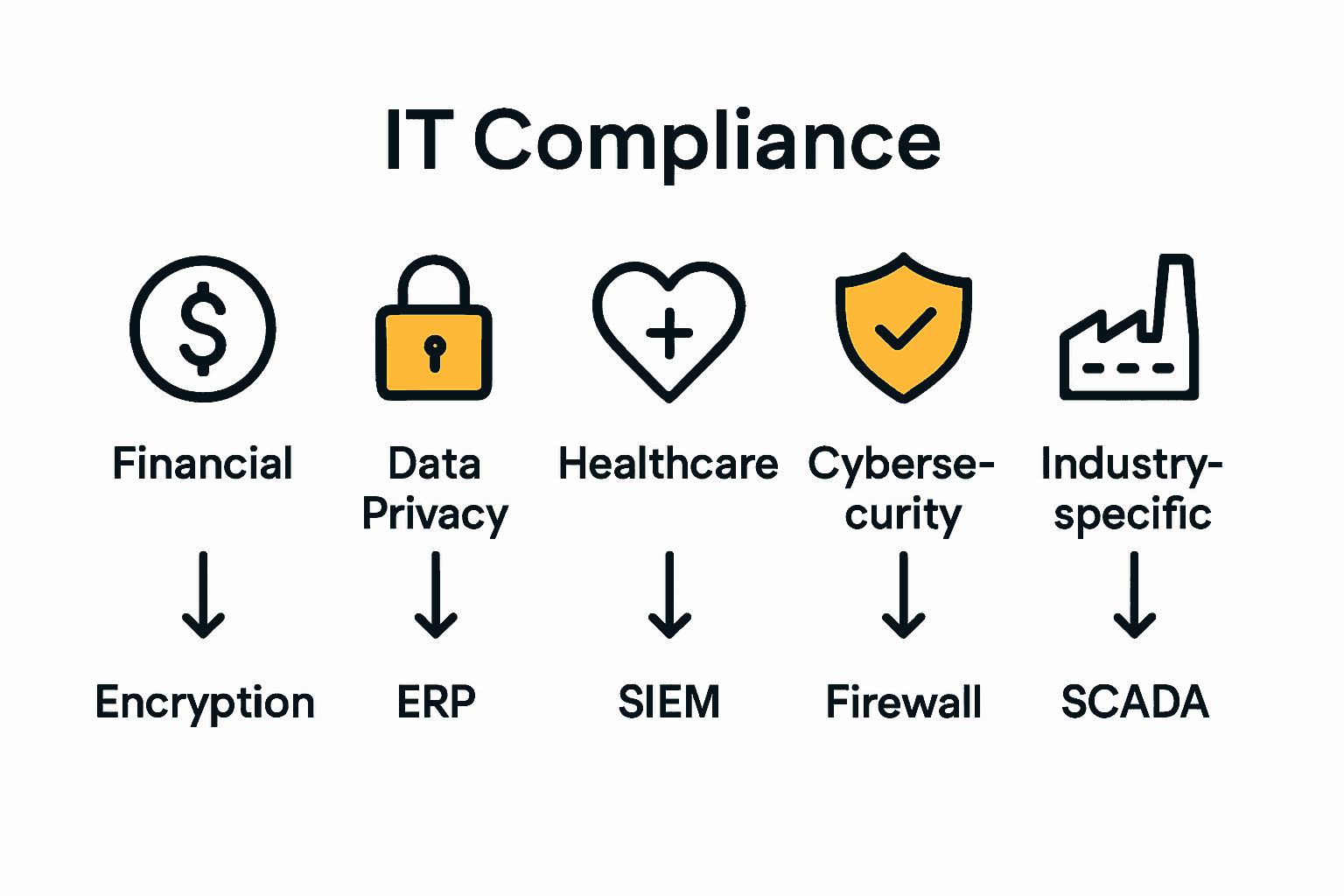
Compliance IT supports multiple critical domains, each requiring specialized technological strategies to ensure regulatory adherence and organizational protection. From financial regulations to data privacy standards, IT plays a pivotal role in helping businesses maintain legal and operational integrity across diverse regulatory landscapes.
WJARR research highlights that financial compliance represents one of the most significant areas where IT systems provide essential support. Specifically, IT helps organizations implement robust financial reporting mechanisms, track transactions, prevent fraud, and ensure transparent financial management practices that meet stringent regulatory requirements.
Key Compliance Types Supported by IT
The primary compliance types where IT provides critical support include:
Here’s a summary comparing key compliance types supported by IT:
| Compliance Type | Main IT Focus | Example Technologies |
|---|---|---|
| Financial Compliance | Secure accounting, audit trails | ERP systems Transaction monitoring |
| Data Privacy Compliance | Sensitive data protection | Encryption Access controls |
| Healthcare Compliance | Patient data security HIPAA adherence |
Healthcare IT software Secure storage |
| Cybersecurity Compliance | Threat detection Defensive architecture |
SIEM Firewalls |
| Industry-Specific Compliance | Tailored regulatory solutions | Custom platforms Sector-specific modules |
- Financial Compliance: Implementing secure accounting systems, transaction tracking, and audit trail mechanisms
- Data Privacy Compliance: Protecting sensitive information through encryption, access controls, and secure data management
- Healthcare Compliance: Maintaining HIPAA standards, securing patient records, and ensuring confidential information protection
- Cybersecurity Compliance: Developing security protocols, managing threat detection, and implementing defensive technological infrastructures
- Industry-Specific Regulatory Compliance: Creating tailored technological solutions that address unique regulatory demands in sectors like manufacturing, finance, and healthcare
For businesses in the Monterey Bay Area, understanding these compliance domains is crucial. IT doesn’t just support compliance – it transforms regulatory requirements from potential burdens into strategic advantages that build stakeholder trust and demonstrate organizational professionalism.
Key Technologies for Meeting Compliance
Compliance technologies have evolved dramatically, offering small and medium-sized businesses powerful tools to navigate complex regulatory landscapes. Modern IT solutions now provide comprehensive frameworks that transform compliance from a challenging obligation into a strategic business advantage.
arXiv research highlights the emerging potential of Large Language Models (LLMs) in enhancing cybersecurity policies for SMEs. These advanced AI technologies can significantly strengthen cyber defenses by automatically analyzing complex security protocols, identifying potential vulnerabilities, and recommending proactive compliance strategies that adapt to changing regulatory environments.
Essential Compliance Technologies
Key technologies supporting organizational compliance include:
- Blockchain Systems: Creating transparent, immutable record-keeping mechanisms
- Encryption Technologies: Protecting sensitive data across digital platforms
- Security Information and Event Management (SIEM): Real-time monitoring and incident response tracking
- Cloud Compliance Management Tools: Automated regulatory tracking and reporting
- Multi-Factor Authentication (MFA): Advanced access control and identity verification
Additionally, arXiv research demonstrates how emerging technologies like blockchain can simplify complex regulatory processes. For businesses in the Monterey Bay Area, these technologies represent more than compliance tools – they are strategic investments that enhance operational efficiency, reduce risk, and build stakeholder confidence through demonstrable technological sophistication.
IT’s Legal and Regulatory Responsibilities
Information Technology (IT) departments bear significant legal and regulatory responsibilities that extend far beyond traditional technological management. These responsibilities represent a critical layer of organizational risk management, requiring comprehensive understanding of complex legal frameworks and proactive strategic planning.
In the context of small and medium-sized businesses, IT must navigate a complex landscape of legal obligations that encompass data protection, privacy regulations, industry-specific compliance requirements, and cybersecurity standards. The legal responsibilities involve creating robust technological infrastructures that not only support business operations but also demonstrate due diligence in protecting sensitive information and maintaining regulatory adherence.
Core Legal Obligations of IT
Key legal and regulatory responsibilities for IT include:
- Data Protection: Implementing comprehensive security measures to safeguard personal and organizational data
- Privacy Compliance: Ensuring adherence to regulations like GDPR, CCPA, and industry-specific privacy standards
- Breach Notification: Developing and maintaining protocols for reporting and responding to potential security incidents
- Record Retention: Managing digital records in compliance with legal documentation requirements
- Intellectual Property Protection: Safeguarding organizational and client intellectual assets through technological controls
For businesses in the Monterey Bay Area, these responsibilities are not merely technical checkboxes but fundamental components of organizational risk management. IT must function as a strategic partner, translating complex legal requirements into practical, implementable technological solutions that protect the business while enabling continued growth and innovation.
Risks, Pitfalls, and Best Practices
Compliance risks represent a critical challenge for small and medium-sized businesses, with potential consequences that can dramatically impact organizational sustainability. Understanding these risks requires a comprehensive approach that balances technological solutions with strategic planning and proactive management.
Empire Technologies highlights the significant risks businesses face, including substantial financial penalties and potentially devastating reputational damage resulting from non-compliance. The landscape of regulatory requirements is complex and constantly evolving, demanding continuous attention and adaptive strategies from organizational leadership.
Key Compliance Risks and Mitigation Strategies
Potential risks and corresponding best practices include:
- Data Breach Vulnerability: Implement robust cybersecurity protocols, regular security assessments, and comprehensive employee training
- Regulatory Non-Compliance: Develop systematic tracking of changing regulatory requirements and maintain flexible technological infrastructures
- Inadequate Documentation: Create comprehensive record-keeping systems with automated tracking and reporting mechanisms
- Insufficient Security Protocols: Establish multi-layered security approaches including encryption, multi-factor authentication, and continuous monitoring
- Limited Disaster Recovery Capabilities: Design and regularly test comprehensive business continuity and data recovery plans
Superior IT emphasizes the critical importance of regular IT audits as a proactive measure. For businesses in the Monterey Bay Area, these strategies are not just technical requirements but essential components of organizational resilience and strategic risk management.
Strengthen Your SMB’s Compliance with Trusted IT Partnership
Navigating compliance challenges like data protection, cybersecurity, and regulatory tracking can overwhelm small and medium-sized businesses. As highlighted in the article “Role of IT in Compliance: Complete Guide for SMBs,” meeting these complex requirements calls for strategic, tailored IT solutions that protect sensitive data and ensure ongoing adherence to evolving regulations. If you want to avoid costly penalties, reputational harm, and operational risks, having a proactive technology partner who understands your industry-specific compliance needs is crucial.
At SRS Networks, we specialize in providing compliance-focused IT services designed for Monterey Bay Area businesses. From cybersecurity solutions and managed IT services to network infrastructure security and disaster recovery planning, our expert team helps you build resilient, secure systems that support regulatory demands while empowering your growth. We take the time to understand your unique challenges and create an IT roadmap that integrates compliance management seamlessly into your daily operations.
Looking to transform compliance from a burden into a competitive advantage?
Explore our comprehensive Cybersecurity Solutions and Managed IT Services designed to safeguard your business today.
Don’t wait for a compliance breach or audit surprise to take action. Visit SRS Networks now to connect with IT experts who will protect your business, streamline compliance, and keep you focused on what matters most—growing your organization securely and confidently.
Frequently Asked Questions
What is the role of IT in compliance for small and medium-sized businesses?
IT plays a critical role in compliance by creating robust systems that protect sensitive data, track regulatory changes, and implement safeguards across the technological infrastructure. It transforms from a support function to a strategic partner in ensuring legal, security, and industry-specific standards are met.
What are the key compliance responsibilities of IT?
The key compliance responsibilities of IT include data protection, risk assessment, regulatory tracking, documentation, and incident response. These functions help businesses manage and adhere to compliance requirements effectively.
What technologies can help businesses meet compliance requirements?
Essential compliance technologies include blockchain systems for record-keeping, encryption technologies for data protection, Security Information and Event Management (SIEM) for incident response, cloud compliance management tools, and Multi-Factor Authentication (MFA) for advanced access control.
What are some common compliance risks for small and medium-sized businesses?
Common compliance risks include data breach vulnerabilities, regulatory non-compliance, inadequate documentation, insufficient security protocols, and limited disaster recovery capabilities. Implementing robust cybersecurity protocols and regular audits can help mitigate these risks.
Recommended
- GDPR Compliance in Testing: Practical Guide for Marketers 2025
- 7 Essential Steps for a Complete Corporate Law Checklist | Ali Legal