Cybersecurity threats are everywhere and organizations face risks that can cost millions. Research from IBM shows that about 95 percent of cybersecurity breaches come from human error. That is a jaw-dropping number, and most people still think updated software is enough. The real secret to keeping hackers out starts with your employees, not with your technology.
Table of Contents
- What Is Cybersecurity Awareness Training?
- Why Cybersecurity Awareness Training Matters For Organizations
- Key Concepts In Cybersecurity Awareness Training
- How Cybersecurity Awareness Training Empowers Employees
- Real-World Impact Of Cybersecurity Awareness Training
Quick Summary
| Takeaway | Explanation |
|---|---|
| Invest in employee education | Comprehensive training reduces vulnerability to cyber threats significantly. |
| Empower staff as defenders | Employees become proactive in identifying and managing potential security risks. |
| Foster a security-aware culture | Building awareness creates an environment where security is prioritized across the organization. |
| Utilize interactive training methods | Engaging, scenario-based learning enhances retention of cybersecurity protocols. |
| Regularly update training programs | Continuous education ensures employees remain aware of emerging threats and best practices. |
What is Cybersecurity Awareness Training?
Cybersecurity awareness training represents a comprehensive educational approach designed to protect organizations from digital threats by empowering employees with knowledge and skills to recognize, prevent, and respond to potential security risks. Unlike traditional technical security measures, this training focuses on human behavior and decision making as a critical defense mechanism against cyber attacks.
Core Objectives of Cybersecurity Training
The primary goal of cybersecurity awareness training is transforming employees from potential security vulnerabilities into proactive defenders of organizational digital infrastructure. By educating staff about potential threats, training programs aim to:
- Create a security-conscious organizational culture
- Reduce human error in cybersecurity incidents
- Develop practical skills for identifying potential digital risks
- Establish consistent security protocols across all organizational levels
Understanding the Training Approach
Effective cybersecurity awareness training goes beyond simple lecture-style presentations. Modern programs utilize interactive, scenario-based learning that simulates real-world cyber threats. These training modules typically cover critical areas such as:
- Recognizing phishing emails and social engineering tactics
- Understanding password management best practices
- Identifying potential malware and ransomware threats
- Practicing secure internet and email behaviors
According to IBM’s Cyber Security Intelligence Index, approximately 95% of cybersecurity breaches occur due to human error, highlighting the critical importance of comprehensive awareness training.
By investing in employee education, organizations can significantly reduce their vulnerability to potential cyber attacks and create a robust first line of digital defense.
Why Cybersecurity Awareness Training Matters for Organizations
Cybersecurity awareness training has emerged as a critical strategic investment for organizations seeking to protect their digital assets and minimize potential financial and reputational risks associated with cyber threats. By transforming employees from potential vulnerabilities into active defenders, organizations can significantly enhance their overall security posture.
Financial and Operational Implications
The economic impact of cybersecurity incidents can be devastating for organizations. Data breaches and cyber attacks can result in substantial financial losses, ranging from direct monetary theft to expensive recovery and remediation processes. Research indicates that the average cost of a data breach continues to escalate, making prevention through employee education a cost-effective strategy.
Here is a table highlighting the financial and operational implications of cybersecurity breaches, helping readers compare the different business impacts mentioned in the article.
| Impact Area | Description |
|---|---|
| Legal and Regulatory Penalties | Fines or sanctions for failing to comply with data protection laws |
| Direct Monetary Losses | Theft of funds or assets as a result of cyber attacks |
| Recovery and Restoration Expenses | Costs involved in repairing and restoring systems after a breach |
| Loss of Customer Trust and Reputation | Damage to brand credibility and loss of business due to breaches |
Key financial considerations include:
- Potential legal penalties and regulatory compliance fines
- Direct monetary losses from cyber theft
- Expenses related to system recovery and infrastructure restoration
- Potential loss of customer trust and business reputation
Building a Resilient Security Culture
Cybersecurity awareness training goes beyond technical instruction. It represents a fundamental cultural transformation that embeds security consciousness into an organization’s operational DNA. By consistently educating employees about emerging threats and best practices, organizations create a proactive defense mechanism that adapts to evolving digital risks.
Effective training programs help organizations:
- Develop a shared understanding of cybersecurity responsibilities
- Empower employees to make informed security decisions
- Create a collaborative approach to identifying and mitigating potential risks
- Reduce the likelihood of successful cyber attacks through informed personnel
According to research from ISACA, approximately 90% of data breaches can be attributed to human error, underscoring the critical importance of comprehensive cybersecurity awareness training as a fundamental organizational defense strategy.
Key Concepts in Cybersecurity Awareness Training
Cybersecurity awareness training encompasses a comprehensive set of foundational principles and practices designed to equip individuals and organizations with the knowledge necessary to protect digital assets and mitigate potential security risks. Understanding these key concepts enables employees to become proactive defenders against evolving cyber threats.
Fundamental Security Principles
Information security is built upon three core principles known as the CIA Triad: Confidentiality, Integrity, and Availability. These fundamental concepts form the backbone of effective cybersecurity strategies and guide organizations in protecting their digital infrastructure.
The following table summarizes the core principles of the CIA Triad as described in the article, providing a clear definition and organizational purpose for each term.
| Principle | Definition | Organizational Purpose |
|---|---|---|
| Confidentiality | Ensuring that sensitive information is accessible only to authorized individuals | Protects private or proprietary data from unauthorized disclosure |
| Integrity | Maintaining the accuracy and completeness of data throughout its lifecycle | Prevents data tampering, corruption, or unauthorized alteration |
| Availability | Guaranteeing that information and resources are accessible when needed by authorized users | Supports business continuity by ensuring reliable resource access |
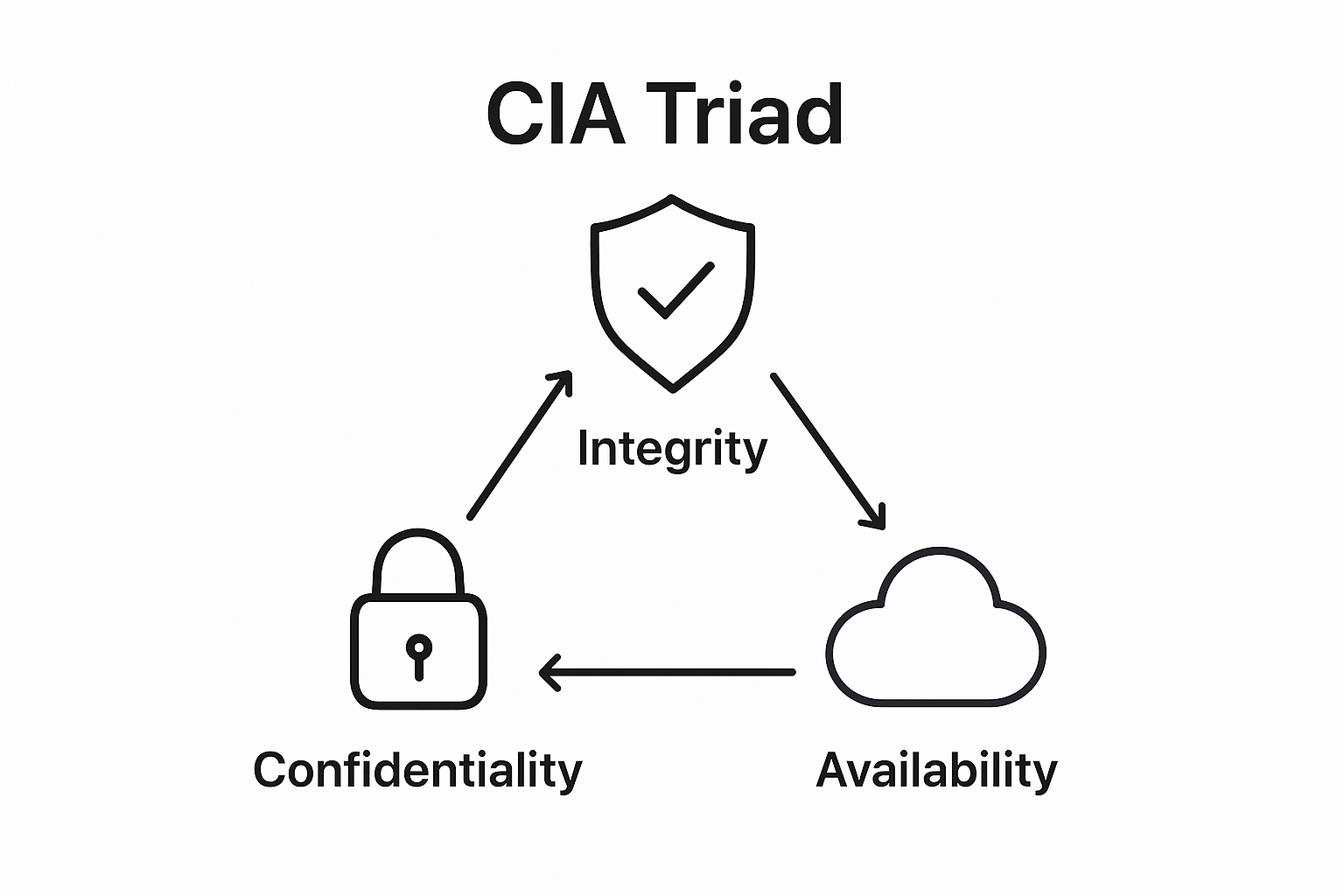
- Confidentiality: Ensuring that sensitive information is accessible only to authorized individuals
- Integrity: Maintaining the accuracy and completeness of data throughout its lifecycle
- Availability: Guaranteeing that information and resources are accessible when needed by authorized users
Threat Recognition and Risk Management
Effective cybersecurity awareness training focuses on developing employees’ ability to recognize and respond to various digital threats. This involves understanding different types of cyber attacks, their potential impact, and strategies for prevention and mitigation.
Key threat categories include:
- Phishing and social engineering attempts
- Malware and ransomware infections
- Insider threats and unauthorized access
- Advanced persistent threats (APTs)
According to the Federal Trade Commission’s Cybersecurity Basics guide, implementing robust security practices such as regular software updates, strong password policies, and multi-factor authentication are critical components of a comprehensive cybersecurity strategy. By understanding these fundamental concepts, organizations can create a more resilient and secure digital environment that adapts to emerging technological challenges.
How Cybersecurity Awareness Training Empowers Employees
Cybersecurity awareness training transforms employees from potential security vulnerabilities into confident, proactive digital defenders. By providing comprehensive education and practical skills, organizations enable their workforce to actively recognize, prevent, and respond to complex cyber threats with precision and understanding.
Knowledge as a Strategic Defense Mechanism
Empowerment through education represents the core philosophy of cybersecurity awareness training. When employees understand the potential risks and consequences of cyber threats, they become more than passive recipients of security protocols. They evolve into strategic partners in maintaining organizational digital resilience.
Key aspects of employee empowerment include:
- Developing critical thinking skills for identifying potential security risks
- Understanding the broader implications of cybersecurity breaches
- Recognizing personal responsibility in protecting organizational assets
- Building confidence in responding to potential security incidents
Practical Skills and Behavioral Transformation
Effective cybersecurity awareness training goes beyond theoretical knowledge. It focuses on developing practical skills that enable employees to make informed decisions in real-world scenarios. This approach involves simulating realistic cyber threat environments, allowing individuals to practice and refine their response strategies without actual risk.
Employees learn to:
- Implement strong password management techniques
- Identify and report suspicious digital communications
- Understand the importance of software updates and patches
- Recognize social engineering tactics and potential manipulation attempts
According to the National Institute of Standards and Technology, an educated workforce is a critical component of organizational cybersecurity strategy. By investing in comprehensive awareness training, organizations can create a robust human firewall that complements technical security measures and significantly reduces the potential for successful cyber attacks.
Real-World Impact of Cybersecurity Awareness Training
Cybersecurity awareness training transcends theoretical knowledge by demonstrating tangible, measurable impacts on organizational security. Real-world scenarios highlight how educated employees can be the most critical line of defense against sophisticated cyber threats, transforming potential vulnerabilities into strategic protective mechanisms.
Preventing Financial and Reputational Losses
The economic consequences of cybersecurity incidents can be devastating. Organizations that implement comprehensive awareness training significantly reduce their risk of costly breaches. Proactive education becomes a strategic investment that prevents potential financial losses and protects organizational reputation.
Key financial protections include:
- Reducing potential monetary losses from cyber attacks
- Minimizing legal and regulatory compliance penalties
- Preventing costly system recovery and infrastructure restoration
- Maintaining customer trust and organizational credibility
Incident Response and Risk Mitigation
Employees trained in cybersecurity awareness become active participants in organizational defense strategies. Their ability to quickly recognize, report, and respond to potential threats creates a dynamic, responsive security ecosystem. This human-centric approach complements technological security measures, creating a multilayered defense mechanism.
Employees learn to:
- Rapidly identify and escalate potential security threats
- Understand the importance of immediate incident reporting
- Apply learned protocols during potential breach scenarios
- Collaborate effectively with IT security teams
According to CISA’s Cybersecurity Awareness & Training program, continuous education is fundamental in building organizational cyber resilience. By transforming employees from potential security weak points into informed, vigilant defenders, organizations can create a robust shield against the ever-evolving landscape of digital threats.

Safeguard Your Business through Smart Cybersecurity Awareness
Did you know that most cyber breaches stem from human error? As explored in our article, transforming your staff into vigilant defenders with the right cybersecurity awareness training is critical for protecting your business from costly and reputation-damaging attacks. Without a trusted partner to guide ongoing education and reinforce best practices, the risk of falling victim to phishing schemes or malware increases dramatically.
Take control of your security future with support from a team that prioritizes your success. At SRS Networks, we specialize in customized cybersecurity solutions and proactive training that addresses the unique risks and compliance requirements facing your business. Connect with us today to build a resilient security culture and turn your employees into a powerful first line of defense. Your organization deserves technology that keeps you safe and empowers your growth—start that journey now with a free assessment at SRS Networks.
Frequently Asked Questions
What is the purpose of cybersecurity awareness training?
Cybersecurity awareness training aims to educate employees about potential cyber threats and empower them to recognize, prevent, and respond to digital security risks, transforming them into proactive defenders of the organization’s digital infrastructure.
Why is it important for organizations to invest in cybersecurity awareness training?
Investing in cybersecurity awareness training is crucial for organizations as it reduces the likelihood of human error that leads to data breaches, minimizes financial losses from cyber incidents, and helps build a resilient security culture within the organization.
What topics are typically covered in cybersecurity awareness training?
Cybersecurity awareness training usually covers topics such as recognizing phishing emails, understanding password management best practices, identifying malware and ransomware threats, and practicing secure internet and email behaviors.
How does cybersecurity awareness training empower employees?
Cybersecurity awareness training empowers employees by providing them with the knowledge and practical skills needed to make informed decisions, recognize potential security risks, and act confidently during cyber threat scenarios, thereby enhancing the organization’s overall cybersecurity posture.