Cyberattacks are no longer just an IT problem, they have become a boardroom priority and a direct threat to business survival. Take this in. The average cost of a data breach in the US has soared to $9.44 million and that number climbs every year. Many think hiring more tech experts solves the issue, but true defense starts with executive leadership owning cybersecurity as a core business risk. This flips the entire playbook and puts responsibility squarely in the hands of those steering the company.
Table of Contents
- What Is Cybersecurity For Executives And Its Importance?
- Why Executives Need To Prioritize Cybersecurity In Business
- How Cybersecurity Risks Evolve: Understanding Threat Landscapes
- Key Concepts In Cybersecurity: Frameworks, Policies, And Practices
- The Role Of Leadership In Developing A Cybersecurity Culture
Quick Summary
| Takeaway | Explanation |
|---|---|
| Cybersecurity is a strategic business risk. | Leaders must treat cybersecurity as a vital aspect of overall business risk management, not just an IT issue. |
| Develop proactive cyber risk management frameworks. | Executives should establish robust frameworks that identify, protect, detect, respond, and recover from cyber threats. |
| Allocate resources for cybersecurity initiatives. | Sufficient funding and resources are essential for implementing effective cyber defenses and risk management strategies. |
| Foster a cybersecurity-focused organizational culture. | Leadership must embed security responsibilities throughout the organization to encourage active participation in cybersecurity practices. |
| Stay informed on evolving cyber threats. | Executives need to recognize that cyber threats are constantly changing and require continuous adaptation and learning. |
What is Cybersecurity for Executives and Its Importance?
Cybersecurity for executives is a comprehensive strategic approach to protecting an organization’s digital infrastructure, data assets, and technological ecosystem from sophisticated cyber threats. Unlike traditional IT security, this approach requires leaders to view cybersecurity as a critical business risk management function that extends far beyond technical implementations.
Understanding the Executive’s Cybersecurity Role
Executives are now directly responsible for establishing a robust cyber risk management framework. According to CISA, cyber risk is a strategic enterprise risk that demands board-level commitment and integration into overall corporate governance. This means leaders must:
- Develop comprehensive cyber risk strategies
- Allocate appropriate resources for protection
- Create organizational cultures that prioritize digital security
Financial and Operational Implications
The potential consequences of inadequate cybersecurity are substantial. Research from the University of Tulsa reveals that the average data breach in the U.S. costs approximately $9.44 million. These staggering financial risks underscore why cybersecurity is no longer just an IT concern but a critical business imperative that can determine an organization’s long-term survival.
Effective cybersecurity for executives involves understanding technological vulnerabilities, regulatory compliance requirements, and developing proactive defense strategies that protect both digital and physical business assets. Learn more about our comprehensive security approach to safeguard your organization’s most valuable resources.
Why Executives Need to Prioritize Cybersecurity in Business
In today’s rapidly evolving digital landscape, cybersecurity has transformed from a technical necessity to a critical business survival strategy. Executives are now on the front lines of defending their organizations against increasingly sophisticated and pervasive cyber threats that can potentially devastate business operations, reputation, and financial stability.
Strategic Business Risk Management
Cybersecurity is fundamentally a strategic business risk that requires proactive leadership. According to NIST, executive leadership plays a pivotal role in establishing comprehensive risk management frameworks. This involves:
- Creating clear cybersecurity governance structures
- Allocating sufficient resources for digital defense
- Establishing accountability mechanisms across organizational levels
Financial and Reputational Protection
The potential consequences of cybersecurity failures extend far beyond immediate technical disruptions. Data breaches can trigger catastrophic financial losses, including direct monetary damages, legal expenses, regulatory penalties, and long-term reputational harm. Customers and stakeholders increasingly expect organizations to demonstrate robust digital protection capabilities.
Compliance and Competitive Advantage
Modern executives recognize that effective cybersecurity is a competitive differentiator. By implementing advanced security strategies, organizations can build trust, protect sensitive information, and demonstrate technological sophistication. Explore advanced cybersecurity automation techniques that can provide comprehensive protection while maintaining operational efficiency.
How Cybersecurity Risks Evolve: Understanding Threat Landscapes
Cybersecurity threat landscapes represent a dynamic and continuously shifting ecosystem of digital risks that challenge organizations’ technological defenses. Unlike static security models, modern cyber threats are adaptive, intelligent, and increasingly sophisticated in their approach to penetrating organizational networks.
Emerging Threat Categories
Cybercriminals have evolved from individual hackers to complex, organized networks employing advanced technological strategies.
To help executives understand the evolving threat landscape, the table below categorizes key cyber threats discussed in the article and briefly explains each one.
| Threat Category | Description |
|---|---|
| Advanced Persistent Threats | Long-term, targeted attacks often aimed at critical infrastructure or sensitive data |
| Business Email Compromise | Fraudulent schemes targeting company email systems to steal information or funds |
| Ransomware Attacks | Malicious software that encrypts data for extortion, often with complex demands |
| State-Sponsored Cyber Espionage | Attacks orchestrated by nation-states to obtain confidential data or disrupt operations |
| Supply Chain Vulnerabilities | Exploiting weaknesses in third-party partners or providers to compromise target organizations |
| According to FBI cybercrime research, these emerging threat categories include: |
- Advanced persistent threats targeting critical infrastructure
- Business email compromise schemes
- Ransomware attacks with complex extortion mechanisms
- State-sponsored cyber espionage operations
- Supply chain vulnerability exploitations
Technological Complexity and Attack Vectors
Threat landscapes are becoming increasingly intricate, with cybercriminals leveraging artificial intelligence, machine learning, and sophisticated social engineering techniques. Modern attacks are no longer simply about breaching technical defenses but manipulating human behavior and exploiting organizational vulnerabilities.
Strategic Adaptation and Resilience
Executives must recognize that cybersecurity is not a one-time implementation but a continuous process of adaptation and learning. Learn more about developing robust security strategies that anticipate and mitigate emerging digital risks. Proactive threat intelligence has become crucial in understanding and neutralizing potential cyber risks before they can cause significant damage.

Key Concepts in Cybersecurity: Frameworks, Policies, and Practices
Cybersecurity frameworks represent structured methodologies that guide organizations in managing digital risks, protecting critical assets, and establishing comprehensive security strategies. These frameworks provide executives with systematic approaches to understanding, implementing, and maintaining robust cybersecurity infrastructure.
Foundational Cybersecurity Frameworks
According to NIST, effective cybersecurity frameworks typically encompass five critical core functions that serve as strategic pillars for organizational defense
The following table summarizes the five foundational functions of effective cybersecurity frameworks to give executives a quick reference guide to each critical area.
| Core Function | Purpose |
|---|---|
| Identify | Understand and manage cybersecurity risks across all systems |
| Protect | Implement safeguards to prevent security breaches |
| Detect | Develop abilities to identify cybersecurity threats |
| Respond | Create protocols for acting on detected security incidents |
| Recover | Establish plans to restore operations after an attack |
| : |
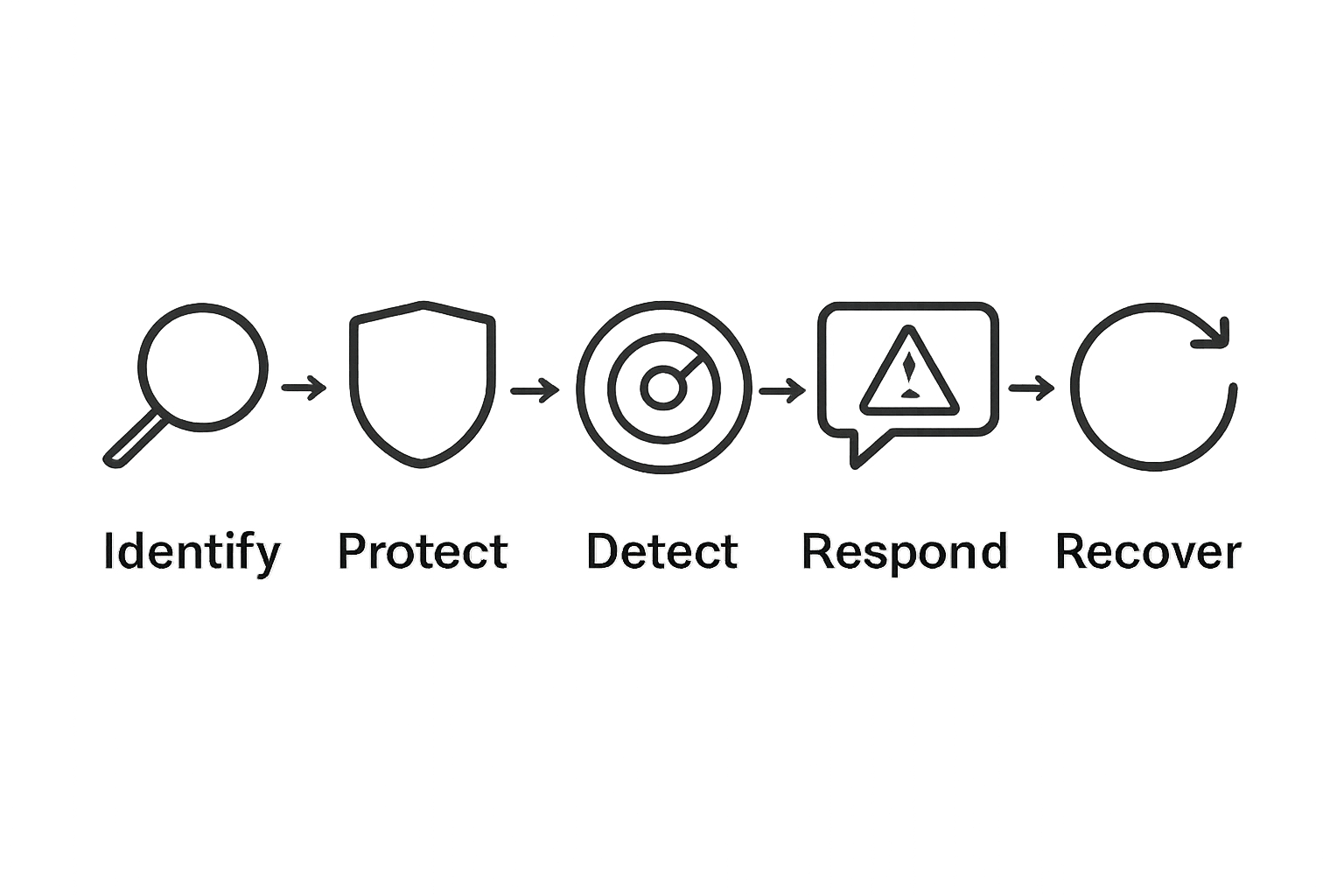
- Identify: Understand and manage cybersecurity risks across organizational systems
- Protect: Implement safeguards to limit potential security breaches
- Detect: Develop capabilities to identify potential cybersecurity events
- Respond: Create action protocols for addressing detected security incidents
- Recover: Establish plans for maintaining resilience and restoring capabilities after an incident
Policy Development and Implementation
Comprehensive cybersecurity policies function as the organizational blueprint for digital defense. These policies must transcend technical specifications and integrate holistic risk management strategies that align with broader business objectives. Successful policy frameworks require continuous adaptation, regular review, and alignment with emerging technological landscapes.
Strategic Risk Management
Cybersecurity is fundamentally a dynamic risk management discipline. Executives must view security not as a static technical solution but as an ongoing strategic process. Explore advanced cybersecurity automation techniques that can help organizations develop more responsive and intelligent security approaches. Proactive risk assessment becomes crucial in anticipating and mitigating potential digital vulnerabilities before they can be exploited.
The Role of Leadership in Developing a Cybersecurity Culture
Developing a robust cybersecurity culture requires more than technical implementations—it demands strategic leadership commitment that transforms organizational mindsets and behaviors toward digital protection. Executives play a pivotal role in establishing security as a fundamental business priority that permeates every organizational level.
Establishing Clear Expectations and Accountability
According to NIST research, leadership must create explicit guidelines that communicate the importance of cybersecurity. This involves:
- Defining clear security responsibilities for every organizational role
- Creating transparent communication channels about potential digital risks
- Implementing consistent performance metrics related to security practices
- Developing comprehensive training programs that emphasize individual accountability
Strategic Communication and Engagement
Effective cybersecurity leadership transcends policy documentation. Executives must actively demonstrate commitment through consistent messaging, visible support for security initiatives, and personal engagement. This means regularly discussing cybersecurity during strategic meetings, allocating appropriate resources, and modeling secure behavioral practices.
Embedding Security into Organizational DNA
Cybersecurity cannot be an isolated department but must become an integrated aspect of organizational culture. Explore strategies for building security awareness that transform passive compliance into active participation. Continuous learning and adaptation become critical, with leadership fostering an environment where employees understand that cybersecurity is a shared responsibility essential to the organization’s success and survival.
Ready to Take Executive Control Over Your Cybersecurity?
If the risks discussed in “Understanding Cybersecurity for Executives: A Comprehensive Guide” feel uncomfortably close to home, you are not alone. Many business leaders today worry about complex digital threats, escalating compliance requirements, and the heavy cost of data breaches. The article shows just how critical cybersecurity is for executives in shaping robust risk management, building trust, and safeguarding your reputation. But translating that strategic vision into daily protection can be overwhelming without the right expertise.

SRS Networks is your partner for bridging the cybersecurity gap. Our local team offers tailored Cybersecurity Solutions and proactive support designed for busy executives who need peace of mind. If you are seeking personalized strategies, end-to-end data protection, and ongoing guidance that makes digital security stress-free, visit our website to discover how we deliver real results for businesses like yours. Take the next step to protect your company. The risks are real. The best time to act is now.
Frequently Asked Questions
What is the role of executives in cybersecurity?
Executives are responsible for establishing comprehensive cyber risk management frameworks, allocating resources for digital protection, and creating a culture that prioritizes cybersecurity within the organization.
Why is cybersecurity important for business leaders?
Cybersecurity is crucial for business leaders as it protects the organization from financial losses, reputational damage, and legal liabilities associated with data breaches and cyberattacks.
How can executives effectively manage cybersecurity risks?
Executives can manage cybersecurity risks by developing clear governance structures, allocating sufficient resources, establishing accountability, and implementing continuous risk assessment practices.
What are the key elements of an effective cybersecurity framework?
An effective cybersecurity framework typically encompasses five core functions: Identify, Protect, Detect, Respond, and Recover, which help organizations manage digital risks and safeguard their critical assets.