Cyberattacks are hitting small businesses harder than ever and the fallout is serious. Nearly 60 percent of small businesses that get hacked shut down within six months. That kind of number might sound shocking when most owners think cyber threats are only for big corporations. The real surprise is that small businesses are actually the favorite target for cybercriminals and it is not because their data is more valuable but because stopping them is usually much easier.
Table of Contents
- What Is Cybersecurity And Why Does It Matter For Small Businesses?
- The Key Concepts Of Cybersecurity: Understanding Threats And Vulnerabilities
- How Cybersecurity Works: Measures And Tools Not To Ignore
- Real-World Impacts Of Cybersecurity Breaches On Small Businesses
- Building A Cybersecurity Culture: Education And Preparedness
Quick Summary
| Takeaway | Explanation |
|---|---|
| Invest in Cybersecurity | Small businesses must prioritize cybersecurity to protect against financial and reputational harm. |
| Understand Digital Threats | Recognizing common threats like malware and phishing helps prevent breaches. |
| Regular Employee Training is Crucial | Continuous cybersecurity training empowers employees to be proactive in defense efforts. |
| Implement Multi-layered Security | Use various tools like firewalls and antivirus software for effective protection. |
| Develop Clear Security Protocols | Establishing structured guidelines aids in handling incidents efficiently and reducing risks. |
What is Cybersecurity and Why Does it Matter for Small Businesses?
Cybersecurity represents the comprehensive strategy and set of technologies designed to protect digital systems, networks, programs, and data from malicious attacks, unauthorized access, and potential breaches. For small businesses, cybersecurity is not just a technical requirement but a critical component of their overall business survival and reputation management.
Understanding Digital Threats
Small businesses are increasingly becoming prime targets for cybercriminals. According to the U.S. Small Business Administration, cyberattacks can inflict devastating financial and reputational damage on organizations with limited resources to recover. The digital landscape presents multiple potential entry points for malicious actors:
- Network vulnerabilities
- Weak password protocols
- Unprotected employee devices
- Outdated software systems
- Insufficient employee cybersecurity training
The Business Impact of Cybersecurity
Small businesses without robust cybersecurity protections face significant risks. Potential consequences of a cybersecurity breach include:
- Financial losses from data theft
- Operational disruptions
- Legal liabilities
- Permanent loss of customer trust
- Potential business closure
Statistics reveal that nearly 60% of small businesses that experience a significant cyber incident go out of business within six months. This stark reality underscores why implementing comprehensive cybersecurity measures is not optional but essential for business continuity. Learn more about protecting your digital infrastructure.
The Key Concepts of Cybersecurity: Understanding Threats and Vulnerabilities
Cybersecurity is a complex ecosystem of interconnected strategies and technologies designed to protect digital assets from sophisticated threats. Understanding the fundamental concepts helps small businesses develop comprehensive defense mechanisms that mitigate potential risks.
Types of Cybersecurity Threats
Cybercriminals employ multiple strategies to exploit digital vulnerabilities. According to NIST, these threats can be categorized into several critical types:
To clarify key cybersecurity threats small businesses face, the following table summarizes the different types of threats mentioned and provides a brief description of each.
| Threat Type | Description |
|---|---|
| Malware | Software designed to disrupt, damage, or gain unauthorized access to computer systems |
| Phishing | Deceptive attempts to obtain sensitive information by impersonating trustworthy entities |
| Ransomware | Malicious software that encrypts business data and demands payment for restoration |
| Social Engineering | Psychological manipulation techniques designed to trick employees into revealing confidential data |
- Malware: Software designed to disrupt, damage, or gain unauthorized access to computer systems
- Phishing: Deceptive attempts to obtain sensitive information by impersonating trustworthy entities
- Ransomware: Malicious software that encrypts business data and demands payment for restoration
- Social Engineering: Psychological manipulation techniques designed to trick employees into revealing confidential information
Identifying Digital Vulnerabilities
Every digital system contains potential weaknesses that cybercriminals can exploit. Vulnerabilities typically emerge from:
- Outdated software and unpatched systems
- Weak authentication protocols
- Inadequate network security configurations
- Human error and lack of cybersecurity awareness
- Insufficient data encryption methods
The Importance of Proactive Defense
Effective cybersecurity requires continuous monitoring and adaptive strategies. Small businesses must recognize that protection is not a one time event but an ongoing process of assessment, prevention, and response. Explore our comprehensive security solutions to safeguard your digital infrastructure against emerging threats.
How Cybersecurity Works: Measures and Tools Not to Ignore
Cybersecurity functions through a multi layered approach that combines technological solutions, strategic planning, and human awareness to create comprehensive digital protection. Small businesses must understand these intricate defense mechanisms to effectively safeguard their digital assets.
Essential Cybersecurity Tools and Technologies
According to the Small Business Administration, businesses need a robust toolkit to defend against digital threats. Critical technological measures include:
- Firewalls: Network security systems that monitor and control incoming and outgoing traffic
- Antivirus Software: Programs designed to detect, prevent, and remove malicious software
- Encryption Tools: Technologies that protect sensitive data by converting information into secure code
- Multi Factor Authentication: Security mechanism requiring multiple verification steps for access
Implementing Comprehensive Security Strategies
Effective cybersecurity goes beyond technological solutions. Businesses must develop holistic approaches that address both technical and human elements:
- Regular security assessments and vulnerability scans
- Comprehensive employee cybersecurity training programs
- Developing clear security policies and incident response protocols
- Maintaining updated software and system patches
- Implementing robust backup and recovery systems
Continuous Monitoring and Adaptation
Cybersecurity is an ongoing process that requires constant vigilance and adaptation. Threats evolve rapidly, demanding businesses remain proactive in their defensive strategies. Learn about our advanced security monitoring solutions to stay ahead of emerging digital risks and protect your business infrastructure.
Real-World Impacts of Cybersecurity Breaches on Small Businesses
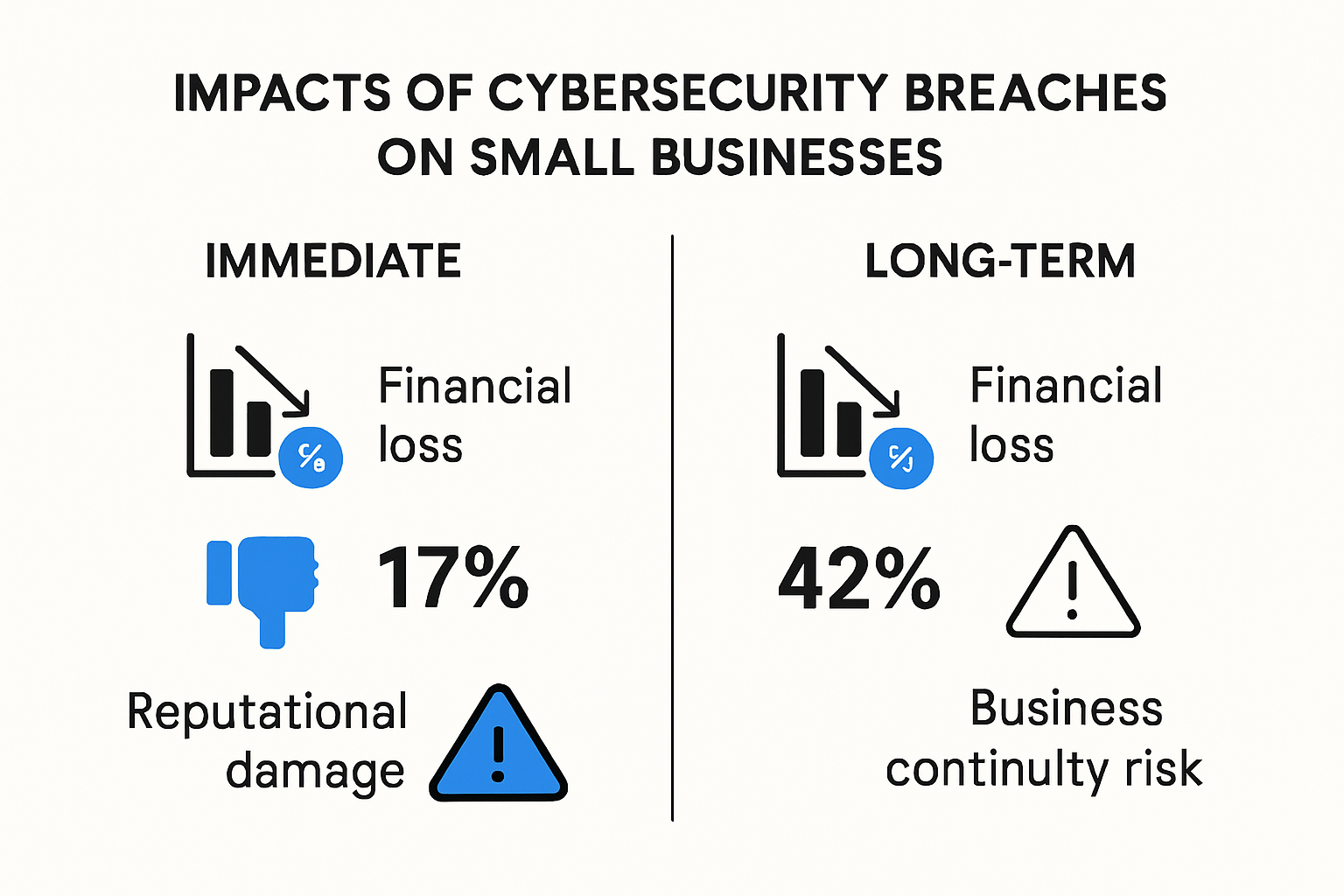
Cybersecurity breaches represent far more than technical disruptions they are potentially catastrophic events that can fundamentally compromise a small business’s financial stability, operational integrity, and long-term survival. Understanding the comprehensive consequences helps businesses recognize the critical importance of proactive digital defense strategies.
The following table outlines potential impacts of cybersecurity breaches on small businesses, helping illustrate why proactive protection is essential.
| Impact Area | Examples of Consequences |
|---|---|
| Financial | Direct financial theft, system recovery costs, fines, lost revenue, compensation expenses |
| Reputational | Loss of customer trust, negative publicity, damaged brand reputation |
| Operational | Disrupted operations, downtime, challenges to business continuity |
Financial Devastation and Economic Consequences
According to the Federal Communications Commission, cybersecurity incidents can inflict severe financial damage on small businesses. The economic repercussions extend beyond immediate monetary losses:
- Direct financial theft from bank accounts
- Costs of system recovery and digital forensics
- Potential regulatory fines and legal penalties
- Lost revenue during operational downtime
- Expenses related to customer notification and potential compensation
Reputational Destruction and Trust Erosion
Beyond financial impact, cybersecurity breaches can permanently damage a business’s reputation and customer relationships. When sensitive information is compromised, businesses face:
- Immediate loss of customer confidence
- Negative public perception and media scrutiny
- Potential long-term brand reputation damage
- Difficulty attracting new customers and retaining existing ones
- Challenges in rebuilding trust and credibility
Operational Disruption and Business Continuity Risks
Cyber incidents can completely paralyze business operations, creating cascading challenges that threaten organizational survival. Learn about our comprehensive disaster recovery strategies to understand how businesses can mitigate these profound risks and ensure operational resilience in the face of digital threats.
Building a Cybersecurity Culture: Education and Preparedness
Establishing a robust cybersecurity culture transcends technological solutions it requires comprehensive organizational commitment and continuous employee engagement. Small businesses must recognize that human behavior represents both the most significant vulnerability and the strongest defense against digital threats.
Foundational Employee Cybersecurity Training
According to the Small Business Administration, effective cybersecurity education involves more than periodic workshops. Successful training programs must be dynamic, interactive, and tailored to address specific organizational risks:
- Practical Simulation Exercises: Realistic phishing and social engineering scenario training
- Regular Security Awareness Updates: Quarterly briefings on emerging digital threats
- Personalized Learning Paths: Role specific cybersecurity modules for different employee functions
- Interactive Assessment Techniques: Ongoing knowledge testing and skill evaluation
Developing Organizational Cybersecurity Protocols
Creating a comprehensive cybersecurity framework requires strategic planning and clear communication. Businesses must establish structured guidelines that empower employees to become active participants in digital defense:

- Creating clear incident reporting mechanisms
- Establishing transparent communication channels
- Defining explicit security responsibilities
- Implementing consistent accountability measures
- Developing comprehensive response strategies
Continuous Learning and Adaptation
Cybersecurity preparedness is an evolving journey that demands constant vigilance and adaptability. Organizations must foster a proactive learning environment where employees understand their critical role in maintaining digital resilience. Explore our comprehensive security awareness solutions to transform your team into a robust first line of defense against emerging cyber threats.
Ready to Secure Your Small Business Against Real Cyber Threats?
Is your business fully protected against data breaches, operational disruptions, and reputation loss? The article above highlights the real risks faced by small businesses such as outdated systems, weak training, and gaps in disaster recovery. At SRS Networks, we understand the emotional stress and financial damage that can follow a single cyber incident. Your peace of mind comes from knowing experts are watching over your digital assets every day.
Join the many Central Coast businesses that trust SRS Networks for proven cybersecurity solutions. Our team helps you close vulnerabilities and build operational resilience with managed IT, proactive security, and disaster recovery strategies. Take the first step towards stronger protection by exploring our services or reaching out for a custom risk assessment. Don’t wait until a threat becomes your reality. Secure your business future now.
Frequently Asked Questions
What is cybersecurity, and why is it important for small businesses?
Cybersecurity is a strategy and set of technologies aimed at protecting digital systems, networks, and data from malicious attacks. For small businesses, it is crucial to safeguard sensitive information, prevent financial loss, and maintain customer trust, as they are often targeted by cybercriminals.
What are common cybersecurity threats faced by small businesses?
Common cybersecurity threats include malware, phishing attacks, ransomware, and social engineering. These threats exploit vulnerabilities in digital systems, which can lead to data breaches, financial losses, and operational disruptions.
How can small businesses improve their cybersecurity posture?
Small businesses can enhance cybersecurity by implementing measures such as strong password protocols, regular software updates, employee training on cybersecurity awareness, and using essential tools like firewalls and antivirus software to detect and prevent attacks.
What should a cybersecurity response plan for a small business include?
A cybersecurity response plan should include clear incident reporting processes, communication protocols, defined roles and responsibilities, and strategies for addressing potential threats. It is crucial to continually assess and adapt the plan based on evolving cyber threats.