Cyber threats are more than just an IT headache. Each year, cyberattacks cost businesses over $1 trillion worldwide. Most people think of hackers sitting in dark rooms, but the real dangers can slip in through a single email or even a friendly conversation. The most damaging attacks are now coming from unexpected directions and catching even the best-prepared companies by surprise.
Explore Cyber Threats: Types, Impacts & Prevention
- What Are Cyber Threats And Their Classification?
- Why Understanding Cyber Threats Is Crucial For Businesses
- How Do Different Types Of Cyber Threats Operate?
- The Impact Of Cyber Threats On Various Industries
- Key Concepts And Prevention Strategies For Cyber Threats
Quick Summary
| Takeaway | Explanation |
|---|---|
| Understand cyber threats’ classifications | Familiarize with types such as malware, phishing, and ransomware for effective prevention strategies. |
| Recognize economic impacts of breaches | Cyber threats can lead to financial losses, recovery costs, and legal penalties, especially for small businesses. |
| Implement multilayered cybersecurity strategies | Combine access control, network segmentation, and employee education to enhance digital defense mechanisms. |
| Acknowledge strategic risks beyond finance | Cyber threats risk intellectual property theft and damage customer trust, impacting long-term business viability. |
| Prioritize continuous employee training | Foster a culture of security awareness through regular training to reduce vulnerabilities stemming from human error. |
What are Cyber Threats and Their Classification?
Cyber threats represent complex digital risks that can compromise an organization’s technological infrastructure, financial stability, and operational integrity. These malicious activities target computer systems, networks, and digital assets with the intent to steal, disrupt, or manipulate critical information.
Understanding the Fundamental Nature of Cyber Threats
Cyber threats emerge from various sources and can be categorized based on their origin, methodology, and potential impact. The Federal Bureau of Investigation identifies these threats as criminal activities involving digital systems that can range from individual hacking attempts to sophisticated state-sponsored cyber espionage.
Key characteristics of cyber threats include:
- Intentional attempts to breach digital security
- Potential for significant financial and reputational damage
- Exploitation of technological vulnerabilities
- Dynamic and continuously evolving tactics
Classifications of Cyber Threats
Businesses must understand different types of cyber threats to develop comprehensive defense strategies. The primary classifications include:
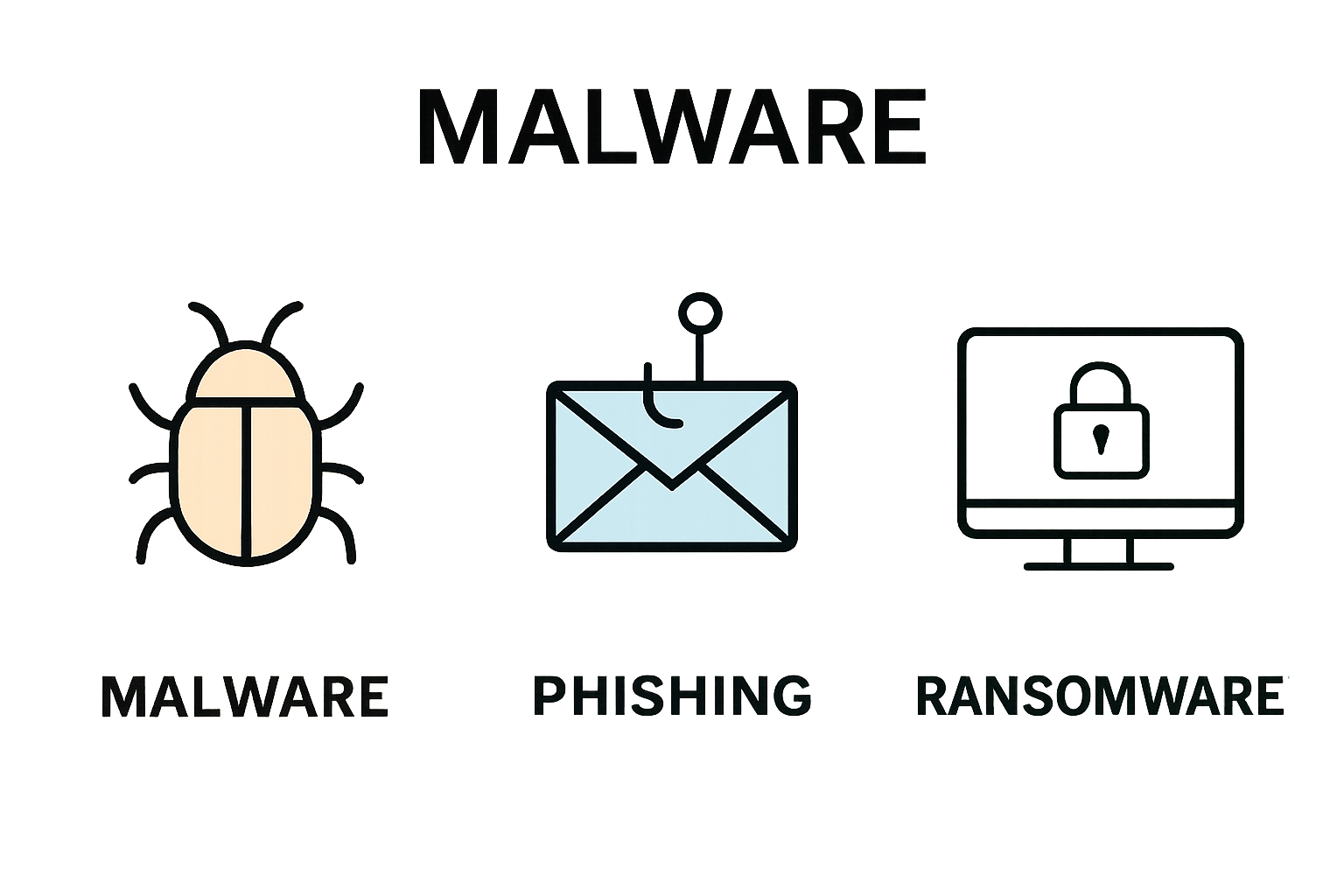
- Malware Attacks: Malicious software designed to infiltrate or damage computer systems
- Phishing Schemes: Deceptive attempts to acquire sensitive information through fraudulent communications
- Ransomware: Digital extortion tactics that lock critical systems until payment is made
- Social Engineering: Psychological manipulation techniques targeting human vulnerabilities
- Distributed Denial of Service (DDoS): Overwhelming digital systems to disrupt normal operations
These threats represent sophisticated digital risks that can emerge from individual hackers, criminal organizations, corporate competitors, and even nation-state actors. Understanding their nuanced characteristics helps organizations build robust cybersecurity frameworks that protect against potential breaches and minimize potential damage.
Each cyber threat carries unique risks and requires specialized defense mechanisms. While technological solutions play a crucial role, human awareness and proactive security practices remain equally important in mitigating these complex digital challenges.
Why Understanding Cyber Threats is Crucial for Businesses
Cyber threats have transformed from occasional risks to persistent challenges that can fundamentally undermine a business’s operational capabilities, financial health, and reputation. Organizations that fail to comprehend and proactively address these digital vulnerabilities expose themselves to potentially catastrophic consequences.
The Economic Impact of Cyber Threats
The U.S. Small Business Administration underscores the profound economic implications of cybersecurity breaches. Small and medium-sized businesses are particularly vulnerable, with potential losses that can dramatically disrupt or even terminate their operations.
Key economic considerations include:
- Potential direct financial losses from theft or ransom
- Significant costs of system recovery and restoration
- Potential legal and compliance penalties
- Long-term reputational damage impacting customer trust
Strategic Risks Beyond Financial Damage
Cyber threats extend far beyond immediate monetary losses. They represent sophisticated strategic risks that can compromise an organization’s core competitive advantages and operational integrity.
Critical strategic vulnerabilities include:
- Intellectual Property Exposure: Potential theft of proprietary designs, research, and innovations
- Operational Disruption: Risk of complete system shutdown or compromised functionality
- Data Integrity Challenges: Potential manipulation or unauthorized access to critical business information
- Customer Trust Erosion: Long-term reputational damage that can undermine market positioning
Businesses must recognize that cybersecurity is not merely an IT problem but a comprehensive organizational challenge requiring strategic planning, continuous education, and proactive defense mechanisms. Understanding cyber threats transforms them from passive potential risks into manageable, strategic considerations that can be systematically addressed through targeted investments in technology, training, and robust security frameworks.
How Do Different Types of Cyber Threats Operate?
Cyber threats are sophisticated digital attacks that exploit technological vulnerabilities through carefully designed strategies. Each type of cyber threat utilizes unique mechanisms to infiltrate, compromise, and potentially damage digital systems and organizational infrastructure.
Intrusion and Penetration Strategies
The National Institute of Standards and Technology provides critical insights into how cyber attackers systematically breach digital defenses. These intrusion strategies typically involve multiple stages of reconnaissance, initial access, and strategic exploitation.
Common penetration techniques include:
- Identifying system vulnerabilities through network scanning
- Exploiting unpatched software weaknesses
- Targeting human error through social engineering
- Utilizing sophisticated malware delivery mechanisms
Operational Mechanics of Specific Threat Types
Different cyber threats employ specialized approaches to achieve their malicious objectives:
- Malware Attacks: Inject harmful code that can replicate, spread, and execute unauthorized commands
- Phishing Schemes: Create convincing fraudulent communications to trick individuals into revealing sensitive information
- Ransomware: Encrypt critical system data and demand financial payment for restoration
- Social Engineering: Manipulate human psychology to bypass technological security barriers
- DDoS Attacks: Overwhelm digital systems by flooding networks with excessive traffic
Each threat type represents a complex digital assault designed to exploit specific organizational weaknesses.
The table below compares the main types of cyber threats discussed in the article, summarizing each threat’s core method and its primary risk to businesses.
| Type of Cyber Threat | Core Method of Attack | Primary Risk to Businesses |
|---|---|---|
| Malware Attacks | Infiltrates devices through malicious software | System damage, data theft, operational loss |
| Phishing Schemes | Uses deceptive emails or messages to steal sensitive data | Credential compromise, unauthorized access |
| Ransomware | Encrypts data and demands payment for its release | Business disruption, financial loss |
| Social Engineering | Manipulates employees using psychological tactics | Circumvents security protocols, data leaks |
| Distributed Denial of Service (DDoS) | Floods networks with excessive traffic to overwhelm systems | Service outages, lost productivity |
The Impact of Cyber Threats on Various Industries
Cyber threats do not discriminate, affecting organizations across diverse sectors with potentially devastating consequences. Each industry faces unique vulnerabilities that cybercriminals strategically exploit, creating systemic risks that extend far beyond immediate financial losses.
Financial Services Industry Vulnerabilities
The International Monetary Fund reveals that cyberattacks have dramatically increased, posing significant risks to financial stability. Banks, investment firms, and financial institutions are prime targets due to their direct access to monetary resources and sensitive client information.
Key financial sector cyber risks include:
- Potential unauthorized financial transactions
- Compromise of customer personal and financial data
- Disruption of critical banking infrastructure
- Erosion of customer trust and institutional reputation
Cross-Industry Threat Landscape
Cyber threats create widespread vulnerabilities that impact multiple sectors simultaneously. Different industries experience distinct challenges based on their technological infrastructure and operational dependencies:
This table highlights the specific impacts and vulnerabilities experienced by different industries as described in the article, allowing readers to quickly compare sector-specific risks.
| Industry | Key Cyber Risks and Impacts |
|---|---|
| Financial | Unauthorized transactions, breached data, infrastructure disruption, loss of customer trust |
| Healthcare | Patient data breaches, disruption of medical systems |
| Manufacturing | Industrial control system attacks, theft of design info |
| Retail | Compromised customer payment data, e-commerce vulnerabilities |
| Technology | Intellectual property theft, system infiltration |
| Education | Student and research data compromises |
- Healthcare: Patient data breaches and potential disruption of medical systems
- Manufacturing: Risks to industrial control systems and proprietary design information
- Retail: Customer payment information theft and e-commerce platform vulnerabilities
- Technology: Intellectual property theft and potential system infiltration
- Education: Student and research data compromises
The pervasive nature of cyber threats demands comprehensive, industry-specific defense strategies. Organizations must recognize that cybersecurity is no longer an optional investment but a critical component of operational resilience. Proactive risk management, continuous employee training, and adaptive technological solutions are essential in mitigating the complex and evolving landscape of digital threats.
Key Concepts and Prevention Strategies for Cyber Threats
Preventing cyber threats requires a comprehensive, multilayered approach that combines technological solutions, human awareness, and strategic organizational practices. Businesses must develop holistic defense mechanisms that anticipate, detect, and rapidly respond to potential digital vulnerabilities.
Foundational Cybersecurity Principles
The Cybersecurity and Infrastructure Security Agency emphasizes critical foundational strategies for protecting digital infrastructure. These principles go beyond technological implementations and require a cultural shift toward proactive security awareness.
Key preventative concepts include:
- Creating a security-first organizational mindset
- Implementing continuous employee training programs
- Developing robust incident response protocols
- Maintaining updated technological defenses
Strategic Defense Mechanisms
Effective cyber threat prevention involves multiple interconnected strategies that address technological, human, and procedural vulnerabilities:
- Access Control: Implementing strict authentication protocols
- Network Segmentation: Limiting potential breach impact zones
- Regular Software Updates: Addressing known system vulnerabilities
- Comprehensive Monitoring: Detecting and responding to suspicious activities
- Employee Education: Building human firewall capabilities
Organizations must recognize that cybersecurity is a dynamic, ongoing process requiring continuous adaptation. No single solution can provide complete protection, but a comprehensive, multilayered approach can significantly reduce organizational risk. Successful prevention combines technological tools, human expertise, and strategic organizational practices to create a resilient digital defense ecosystem.

Protecting Your Business Against Every Cyber Threat
Did learning about the evolving world of malware, ransomware, and phishing in this article make you worry about your business’s safety? Many organizations feel overwhelmed by the constant changes in digital threats and the potential for devastating financial, reputational, and operational losses. Whether you struggle with keeping up with cybercriminals’ latest techniques or need guidance on building a proactive defense strategy, you are not alone. The right partner can make all the difference in making your business resilient, secure, and ready to handle anything.
SRS Networks specializes in safeguarding organizations like yours with proven Cybersecurity Solutions and managed IT support. Discover how our local experts turn detailed threat analysis into customized protection that you can actually trust. Stop losing sleep over data breaches or compliance worries. Visit https://srsnetworks.net now to schedule a free cybersecurity consultation and take control of your digital safety before the next attack hits.
Frequently Asked Questions
What are the common types of cyber threats businesses face?
Common types of cyber threats include malware attacks, phishing schemes, ransomware, social engineering, and Distributed Denial of Service (DDoS) attacks. Each type exploits specific organizational vulnerabilities.
How can businesses protect themselves from cyber threats?
Businesses can protect themselves by implementing robust cybersecurity measures, including access control, network segmentation, regular software updates, continuous employee training, and incident response protocols.
What impact do cyber threats have on a business’s reputation?
Cyber threats can lead to significant reputational damage, eroding customer trust and loyalty. A successful attack may not only cause immediate financial loss but can also affect long-term business relationships and market position.
Why is employee training important in preventing cyber threats?
Employee training is crucial because it helps build a security-first culture within the organization. Educated employees are more likely to recognize potential threats, such as phishing attempts, and can act as a human firewall against cyber attacks.