Network security sounds like a high-tech fortress, and for good reason. Cybercrime is projected to cost the world over $6 trillion each year yet most threats do not come from hackers typing furiously in dark basements. What catches most companies off guard is not their technology failing but simple mistakes and clever psychological tricks aimed at their people.
Table of Contents
- Defining Network Security: Key Terms And Concepts
- The Importance Of Network Security In Today’s Digital World
- How Network Security Functions: Mechanisms And Strategies
- Common Threats And Vulnerabilities Affecting Networks
- Best Practices For Enhancing Network Security In Your Business
Quick Summary
| Takeaway | Explanation |
|---|---|
| Implement Layered Defense Strategies | Utilize multi-layered protections like firewalls and intrusion detection to strengthen security. |
| Conduct Ongoing Employee Training | Regular cybersecurity education transforms employees into active defenders against digital threats. |
| Develop Comprehensive Security Policies | Create structured frameworks outlining access control, incident responses, and audit processes to manage risks. |
| Adopt Continuous Monitoring | Employ real-time monitoring tools to swiftly detect and respond to network anomalies and threats. |
| Recognize Human Behavior Vulnerabilities | Acknowledge that employees can unintentionally compromise security and take proactive measures to address this issue. |
Defining Network Security: Key Terms and Concepts
Network security represents a comprehensive strategy for protecting an organization’s digital infrastructure, data, and communication systems from unauthorized access, cyber threats, and potential vulnerabilities. Understanding the foundational terminology and core concepts is crucial for businesses seeking to develop robust protective measures.
Core Network Security Components
Network security encompasses multiple interconnected layers of technological and strategic defenses designed to safeguard an organization’s digital ecosystem. According to the National Institute of Standards and Technology (NIST), network security involves several critical components that work in concert to create comprehensive protection:
- Access Control: Systems and protocols that determine who can access specific network resources and under what conditions
- Authentication Mechanisms: Methods for verifying the identity of users attempting to access network systems
- Encryption Protocols: Techniques for converting data into secure code to prevent unauthorized interception
These components function as the foundational building blocks of network security, creating multiple barriers against potential cyber intrusions and data breaches.
Below is a table summarizing the core components of network security and their primary functions to help clarify foundational concepts discussed in this section.
| Component | Description |
|---|---|
| Access Control | Defines who can access specific network resources and under what conditions |
| Authentication Mechanisms | Verifies the identity of users attempting to access network systems |
| Encryption Protocols | Converts data into secure code to prevent unauthorized interception |
| Perimeter Protection | Utilizes firewalls and intrusion detection to monitor and control network entry points |
| Endpoint Security | Protects individual devices and network nodes against threats |
Threat Protection Strategies
Effective network security requires a proactive and multifaceted approach to identifying, preventing, and mitigating potential cyber risks. Research from Cybersecurity Ventures highlights the escalating complexity of digital threats, underscoring the need for comprehensive protective strategies.
Organizations must implement sophisticated defense mechanisms that go beyond traditional perimeter protections. This involves developing adaptive security frameworks capable of responding dynamically to emerging threats. Key strategies include continuous monitoring, real-time threat detection, and rapid incident response protocols.
Risk Management and Compliance
Network security is not just about technological solutions but also about understanding and managing potential risks. Businesses must develop holistic approaches that balance technological defenses with strategic risk assessment and regulatory compliance. This involves regularly evaluating network vulnerabilities, implementing comprehensive security policies, and ensuring alignment with industry-specific regulatory standards.
By understanding these fundamental network security concepts, organizations can build resilient digital infrastructures that protect critical assets while maintaining operational efficiency and technological adaptability.
The Importance of Network Security in Today’s Digital World
In an era of increasingly sophisticated digital threats, network security has transformed from an optional technical consideration to a critical business imperative. Organizations of all sizes face unprecedented challenges in protecting their digital assets, intellectual property, and customer information from malicious actors seeking unauthorized access and potential exploitation.
Financial and Reputational Risk Mitigation
Network security serves as a fundamental defense mechanism against potentially catastrophic financial and reputational damages. According to the Cybersecurity and Infrastructure Security Agency (CISA), cyber incidents can result in substantial economic losses and long-lasting organizational harm:
- Direct Financial Losses: Potential costs from data breaches, ransomware attacks, and system disruptions
- Regulatory Penalties: Significant fines for non-compliance with data protection regulations
- Customer Trust Erosion: Potential long-term reputation damage from security incidents
Businesses that neglect robust network security measures expose themselves to significant operational and strategic risks.
Comprehensive Protection Against Evolving Threats
Modern network security extends far beyond traditional perimeter defenses. Cybercriminals continuously develop sophisticated techniques to exploit technological vulnerabilities, requiring organizations to adopt dynamic and adaptive security strategies. Research from IBM Security reveals that the average cost of a data breach continues to increase, highlighting the critical importance of proactive security investments.
Effective network security involves implementing multi-layered protection strategies that address potential vulnerabilities across technological, human, and procedural domains. This comprehensive approach ensures organizations can respond quickly and effectively to emerging digital threats.
Strategic Business Enablement
Contrary to viewing network security as merely a defensive mechanism, forward-thinking organizations recognize it as a strategic business enabler. By establishing robust security frameworks, businesses can:
- Protect sensitive intellectual property
- Ensure uninterrupted operational continuity
- Build trust with customers and stakeholders
- Enable secure digital transformation initiatives
Network security is no longer a technical afterthought but a fundamental component of strategic business planning and risk management. Organizations that prioritize comprehensive security strategies position themselves to navigate the complex digital landscape with confidence and resilience.
How Network Security Functions: Mechanisms and Strategies
Network security operates through a sophisticated ecosystem of technological tools, protocols, and strategic approaches designed to create comprehensive digital defense systems. These mechanisms work collectively to detect, prevent, and respond to potential cyber threats across an organization’s technological infrastructure.
Layered Defense Architecture
According to the National Institute of Standards and Technology (NIST), network security functions through a multi-layered architectural approach that provides comprehensive protection. This strategic framework involves multiple interconnected defense mechanisms:
- Perimeter Protection: Firewalls and intrusion detection systems that monitor and control network entry points
- Access Management: User authentication and authorization protocols that restrict system entry
- Endpoint Security: Protection mechanisms installed directly on individual devices and network nodes
Each layer functions as a critical component in creating a resilient and adaptive security infrastructure that can respond dynamically to emerging digital threats.
Technological Monitoring and Detection
Effective network security relies on continuous monitoring and real-time threat detection capabilities. Advanced security systems utilize sophisticated algorithms and machine learning technologies to identify potential vulnerabilities and suspicious activities across digital networks. These intelligent systems analyze network traffic patterns, user behaviors, and system interactions to detect anomalies that might indicate potential security breaches.
By implementing proactive monitoring strategies, organizations can identify and mitigate potential risks before they escalate into significant security incidents.
Adaptive Response and Incident Management
Beyond prevention, network security mechanisms must include robust incident response protocols. When potential threats are detected, organizations need comprehensive strategies for:
- Rapid threat isolation
- Evidence collection and forensic analysis
- System recovery and restoration
- Vulnerability patch management
Modern network security approaches emphasize not just blocking threats but developing agile, responsive systems that can quickly adapt to new and evolving cyber risks. This requires ongoing training, technological updates, and a strategic approach to digital defense that recognizes the dynamic nature of cybersecurity challenges.
Common Threats and Vulnerabilities Affecting Networks
Network security confronts a complex landscape of evolving digital threats that continuously challenge organizational defenses. Understanding these potential vulnerabilities is crucial for developing proactive and adaptive security strategies that protect critical digital infrastructure.
Malware and Sophisticated Cyber Attacks
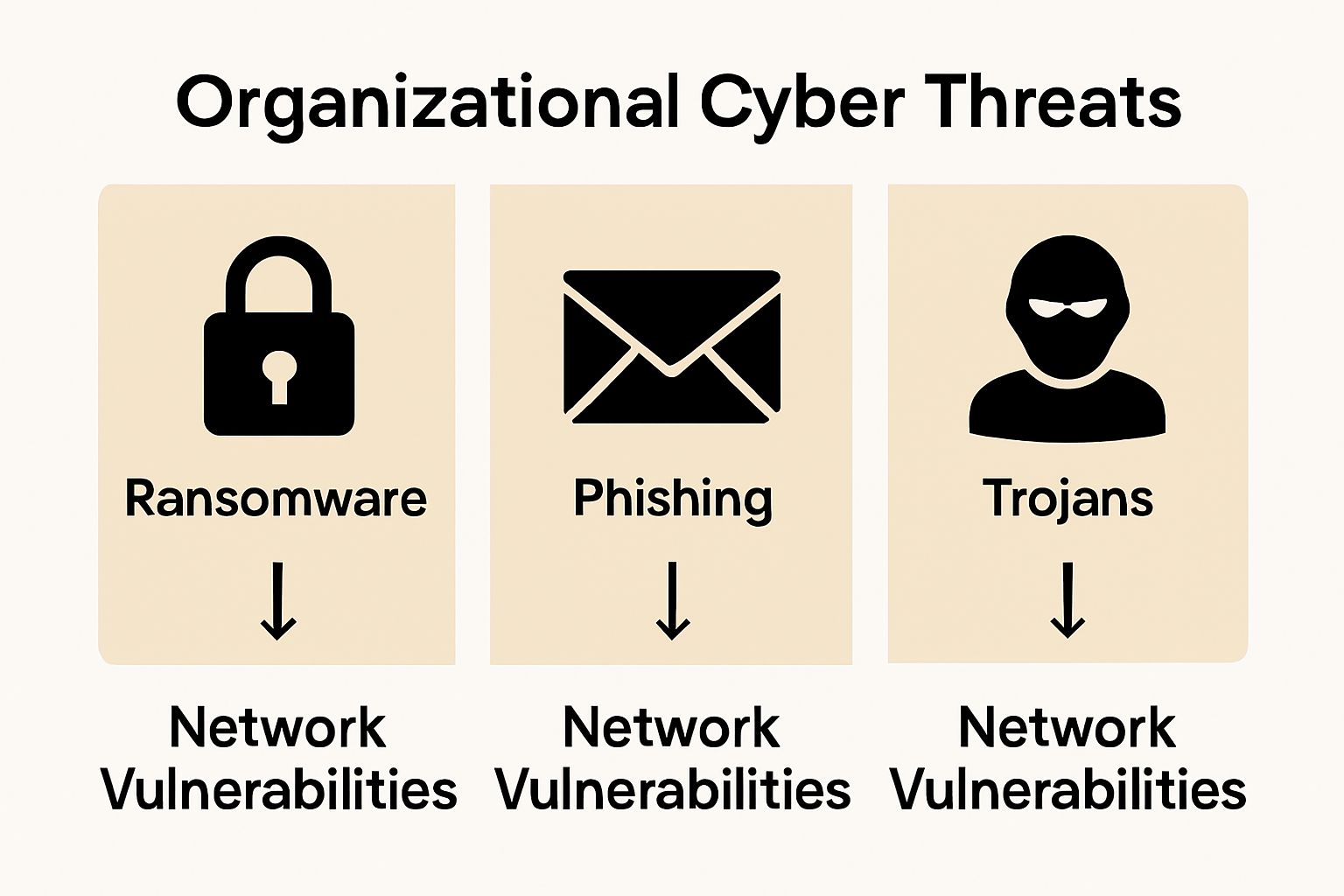
According to the Cybersecurity and Infrastructure Security Agency (CISA), malware represents one of the most persistent and damaging network security threats. These malicious software programs are designed to infiltrate, damage, or disrupt computer systems through various sophisticated mechanisms:
- Ransomware: Encryption-based attacks that lock organizations out of their systems
- Trojans: Disguised software that creates backdoor access for unauthorized users
- Spyware: Programs designed to secretly collect sensitive organizational data
Each malware variant presents unique challenges, requiring comprehensive and adaptive defense mechanisms that can identify and neutralize potential intrusions.
Social Engineering and Human-Centered Vulnerabilities
Contrary to popular perception, network security threats are not exclusively technological. Human behavior represents a significant vulnerability that cybercriminals systematically exploit. Phishing attacks, social manipulation, and psychological tactics often serve as entry points for more complex cyber intrusions.
Employees can unknowingly become the weakest link in an organization’s security infrastructure by clicking suspicious links, sharing sensitive information, or failing to follow established security protocols. This human-centered vulnerability underscores the critical importance of continuous security awareness training and robust organizational security culture.
Infrastructure and Configuration Weaknesses
Technological infrastructure itself can present inherent vulnerabilities that malicious actors can exploit. Unpatched software, misconfigured network settings, outdated systems, and inadequate access controls create potential entry points for cyber threats. Organizations must develop systematic approaches to:
- Regularly update and patch systems
- Conduct comprehensive vulnerability assessments
- Implement strict access management protocols
- Monitor and analyze network traffic for anomalies
By recognizing and addressing these potential weaknesses, businesses can significantly reduce their exposure to cyber risks and create more resilient digital environments.
The following table compares several common types of network security threats discussed in the article, along with their key characteristics and impacts on organizations.
| Threat Type | Main Characteristics | Potential Impact on Businesses |
|---|---|---|
| Ransomware | Encrypts data and demands payment for release | Operational downtime, financial losses |
| Trojans | Disguised as legitimate software, creates backdoors | Unauthorized access, data breaches |
| Spyware | Secretly collects sensitive information | Data theft, violation of privacy |
| Phishing Attacks | Uses deception to trick users into giving up data | Credential theft, unauthorized system access |
| Infrastructure Weaknesses | Relies on unpatched software or misconfigurations | System vulnerabilities, increased risk exposure |

Best Practices for Enhancing Network Security in Your Business
Network security is not a one-time implementation but an ongoing strategic process requiring continuous attention, adaptation, and proactive management. Businesses must develop comprehensive approaches that integrate technological solutions with organizational culture and employee awareness.
Comprehensive Security Policy Development
According to the National Institute of Standards and Technology (NIST), developing a robust security policy forms the foundational cornerstone of effective network protection. Organizations need to create detailed frameworks that address multiple dimensions of digital security:
- Clear Access Control Guidelines: Defining user permissions and authentication protocols
- Incident Response Strategies: Establishing predefined procedures for managing potential security breaches
- Regular Security Auditing: Implementing systematic evaluation processes
A well-designed security policy provides a structured approach to identifying, managing, and mitigating potential network vulnerabilities.
Advanced Technological Safeguards
Implementing cutting-edge technological solutions represents a critical component of network security enhancement. Modern businesses must invest in sophisticated tools that provide multi-layered protection across their digital infrastructure. This involves deploying advanced firewalls, intrusion detection systems, encryption technologies, and real-time monitoring platforms that can quickly identify and neutralize potential threats.
Endpoint protection, cloud security solutions, and adaptive authentication mechanisms offer comprehensive defense strategies that go beyond traditional perimeter-based security models.
Continuous Employee Training and Awareness
Human factors represent a significant vulnerability in network security. Organizations must prioritize ongoing cybersecurity education that transforms employees from potential security risks into active defenders of digital infrastructure:
- Conducting regular phishing awareness workshops
- Providing interactive security training modules
- Simulating potential cyber attack scenarios
- Establishing clear communication channels for reporting suspicious activities
By creating a security-conscious organizational culture, businesses can significantly reduce the likelihood of successful cyber attacks originating from human error or lack of awareness.
Protect Your Business from Modern Network Security Threats
Is your organization worried about evolving cyber threats and complex vulnerabilities? The article you just read explains how risks like malware, social engineering, and misconfigured systems can endanger your data and put your business continuity on the line. Many businesses struggle to keep up with layered defense strategies, real-time threat detection, and regulatory compliance. Even a single security breach can lead to devastating financial losses and lasting damage to your reputation. The need for adaptive network security has never been more urgent.

Ready to secure your business for the future? Partner with SRS Networks for customized IT solutions that tackle the exact challenges described in this article. Our team offers expert network infrastructure and security services as well as ongoing cybersecurity solutions that fit your organization’s needs. Do not wait until a threat becomes a crisis. Visit SRS Networks now and let us help you build a safer, more resilient digital environment today.
Frequently Asked Questions
What is network security and why is it important for businesses?
Network security refers to a comprehensive strategy that protects an organization’s digital infrastructure, data, and communication systems from unauthorized access, cyber threats, and vulnerabilities. It is important for businesses to mitigate financial losses, regulatory penalties, and reputational damage caused by cyber incidents.
What are the core components of network security?
The core components of network security include access control systems, authentication mechanisms, and encryption protocols. These components work together to create multiple layers of defense against cyber intrusions and data breaches.
How can businesses enhance their network security?
Businesses can enhance their network security by developing robust security policies, implementing advanced technological safeguards like firewalls and intrusion detection systems, and prioritizing continuous employee training to foster a security-conscious culture.
What are some common threats that affect network security?
Common threats include malware such as ransomware, phishing attacks that exploit human vulnerabilities, and infrastructure weaknesses like unpatched software and misconfigured settings. Recognizing these threats helps organizations develop proactive security strategies.